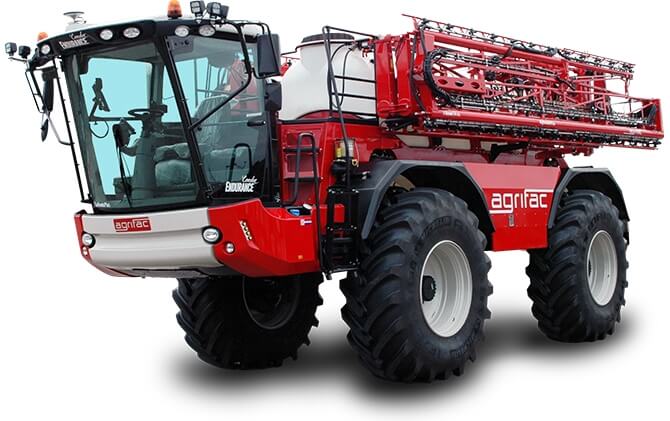
I like good ideas. And at Canada’s Outdoor Farm Show in Woodstock this fall, I saw a sprayer that puts a lot of them in one place. I’m talking about the Agrifac Condor Endurance. I’ve seen European sprayers before, even operated a few. And although they are all well-engineered machines, the Netherlands-based Condor might be the first one to gain traction in North America. Why this one? Let me explain.
Size: If you thought European machines are too small for North American conditions, this one breaks the mold. Sporting an 8000 L (2100 US gal) tank, track widths up to 4.6 m (15 ft), a 320 hp Tier 4 engine, and booms up to 55 m (180 ft) wide, it’s a monster. The smaller Condor offers tank sizes of 1050 or 1300 US gal and is a smaller machine overall.
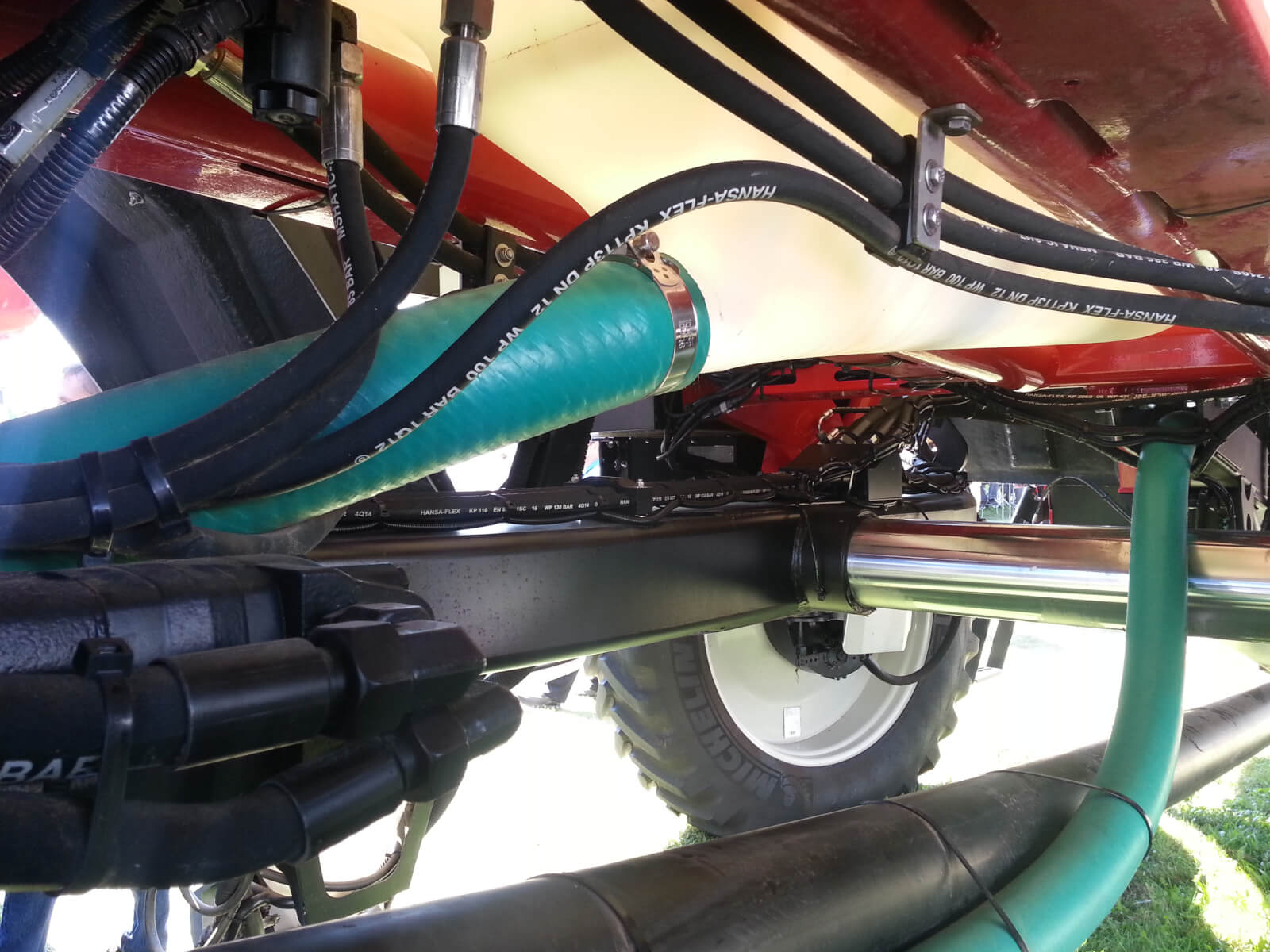
Tank and Pump: The large tank has a molded funnel sump that feeds directly into the pump. Net result is a design that empties the tank completely, leaving a tiny remainder amount, less than 2 gallons according to Rob Blijdorp, with Agrifac North America. Because most of us clean tank remainders by diluting them with clean water, this small remainder needs less water to dilute residues to safe levels, saving time when switching products. The machine is equipped with a Hypro centrifugal pump as standard equipment in North America. A diaphragm pump is optional. This pump type is unusual for North America, but it is self-priming, can run dry, and can produce very high pressures.

Boom: The boom widths available on the Condor are astounding, and there’s no easier place to use them than the North American Great Plains. Wider booms are one of the most effective efficiency boosts in spraying, and allow slower travel speeds while creating fewer tracks. The Condor boom has a recirculating design with a pressure feed from both ends, eliminating boom ends and increasing cleanout speed. Since it uses the boom as part of its circulation system, the boom primes at filling so the new product is at the nozzles right away. Sectional control is flexible, with nozzle-by-nozzle control available.
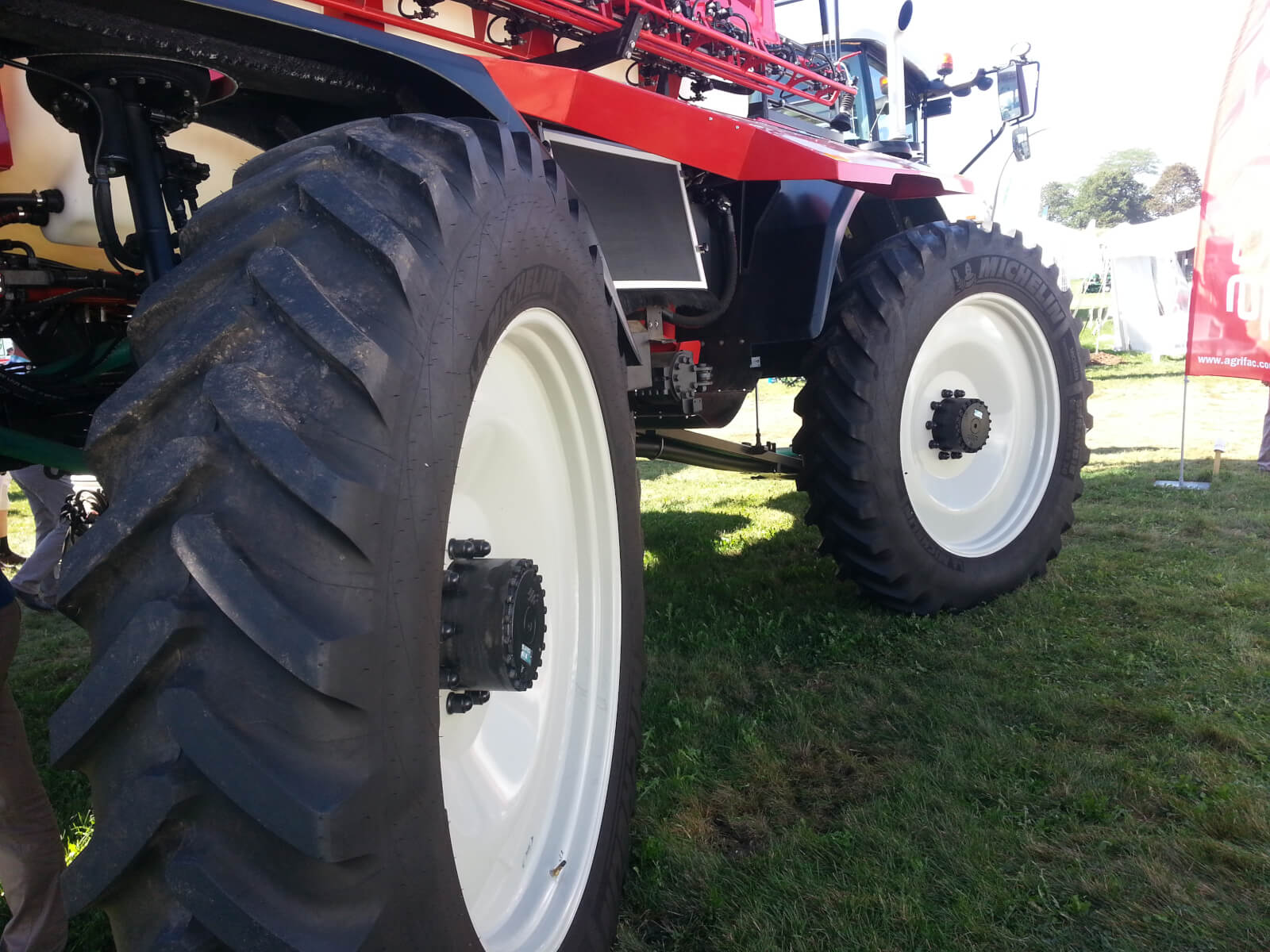
Chassis: The frame and suspension system looks like a walking-beam setup, and is claimed to give a smoother ride with less transfer of bumps to the boom. The system has four-wheel steer capability for less tracking in turns, and a tight turning radius. The weight of the smaller Condor machine equipped with a 120’ boom is 24,500 lbs, the Condor Endurance with the same boom is 31,000 lbs.
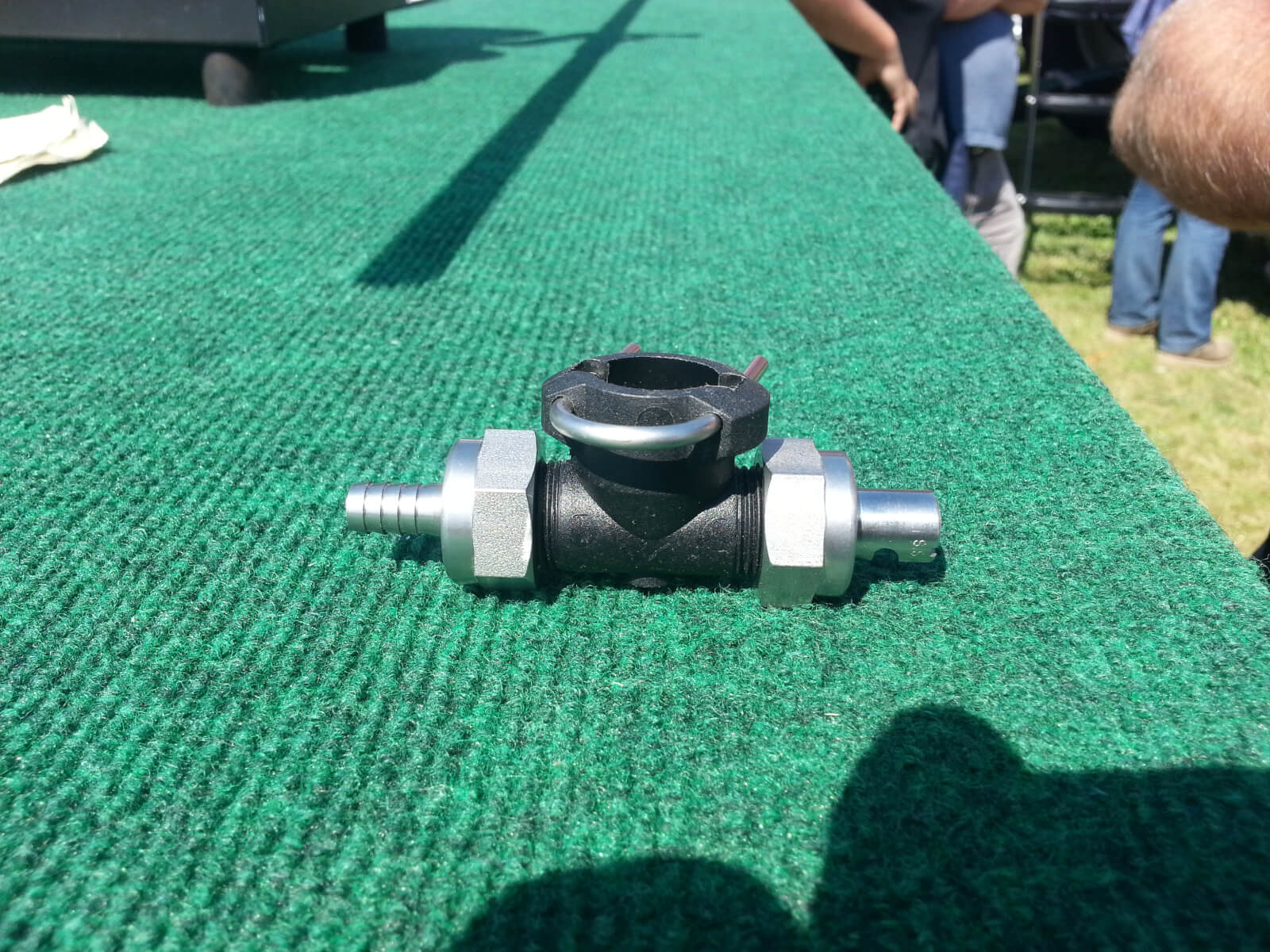
Nozzles: I saved the best for last. Since 1989 (yes, I remember the year!), I’ve been a fan of “twin fluid” nozzles, but have not seen them take hold anywhere. The HighTechAirPlus nozzles are Agrifac’s version. Here’s how they work: Liquid is delivered to the nozzle in the usual way, by pressure. But air is also delivered, created by a dedicated air pump that has modest volume and pressure requirements. Both air and liquid make their way through the same nozzle (a deflector style, similar to the TeeJet FloodJet).
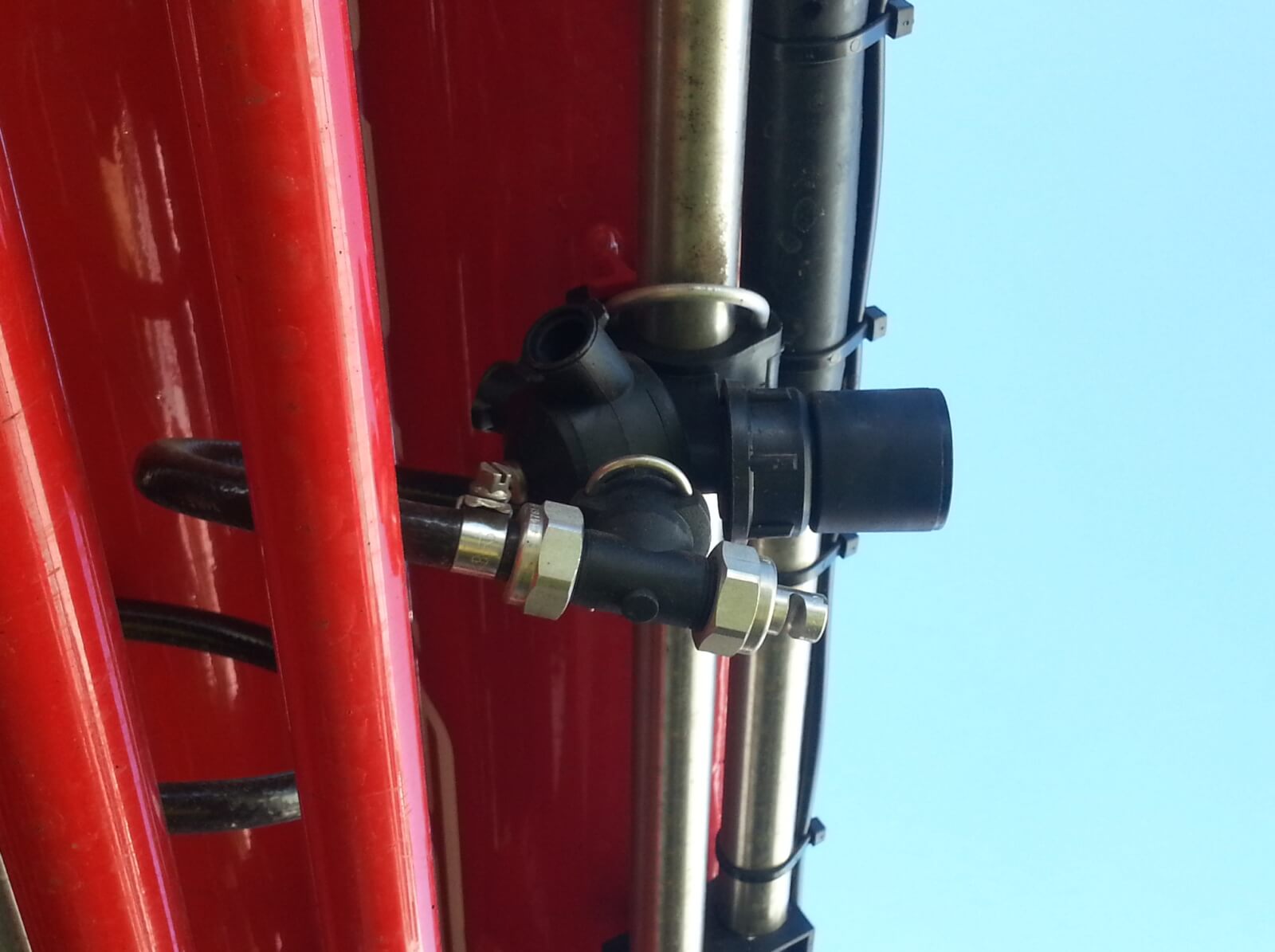
The advantage? Liquid flow and droplet size can be adjusted independently, with air and liquid pressure. More air results in lower liquid flow. It also reduces droplet size. More liquid pressure increases flow, and also reduces droplet size. Clever combinations of both can keep droplet size fairly constant over a wide flow rate range. Alternatively, the nozzles can change droplet size while keeping the same flow rate, depending on the drift or coverage needs at the time. The travel speed range achievable is similar to that with PWM.
Verdict. The jury’s out. As a newcomer to North America, the Agrifac faces a few challenges. Many say it needs a dealer network, inventory and parts. It needs to prove its reliability. It needs to be able to service its machines, especially if parts are non-standard. It needs field cred out here.
But I’m a bit tired of our North American sprayers adding horsepower, speed, and weight to their sprayers each year, and little else. They leave applicators to struggle alone with equally important productivity factors such as quick and thorough cleanout, drift management, nozzle selection and others.
The things that strike me with this new sprayer are Agrifac’s innovative design, and its emphasis on issues that matter to applicators: productivity and excellent control over application rate and droplet size. The company has the right priorities in my books.