Airblast Nozzles – On or Off?

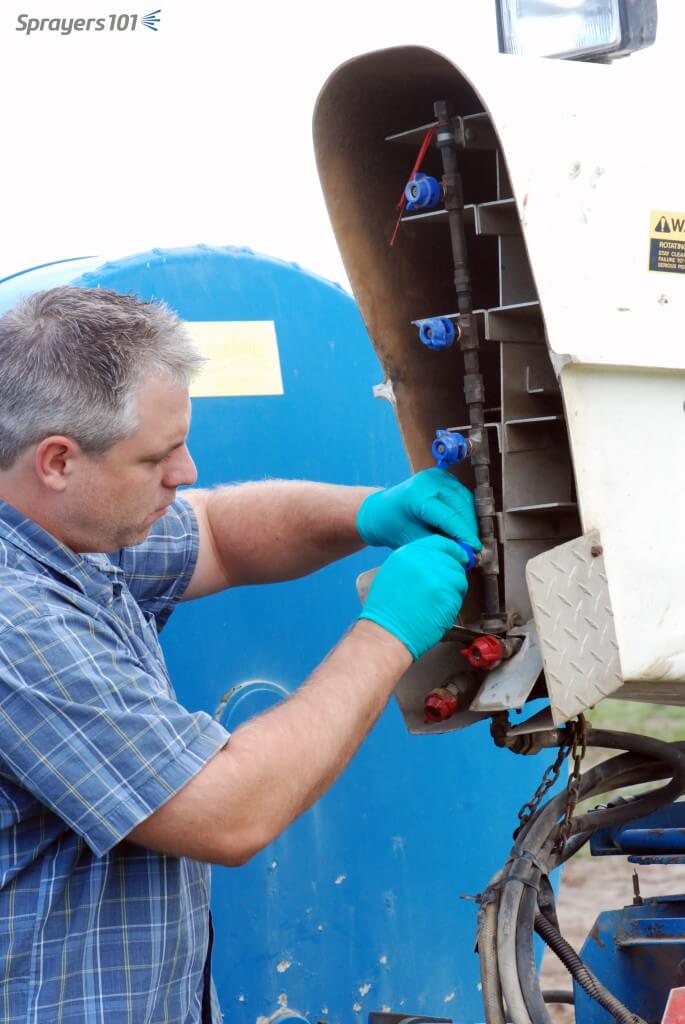
Adjusting the nozzles on a fishtail-style nursery sprayer.

Spray that is not directed at the target is wasted spray. Many pesticide labels specifically require the operator to restrict spray to the target canopy. Spray that escapes above the canopy is a significant source of off-target drift. Foliar applications that extend below the canopy are not efficacious and represent waste and lost productivity. Air […]

Read More… from Airblast Nozzles – On or Off?

The Droplet Size Debate

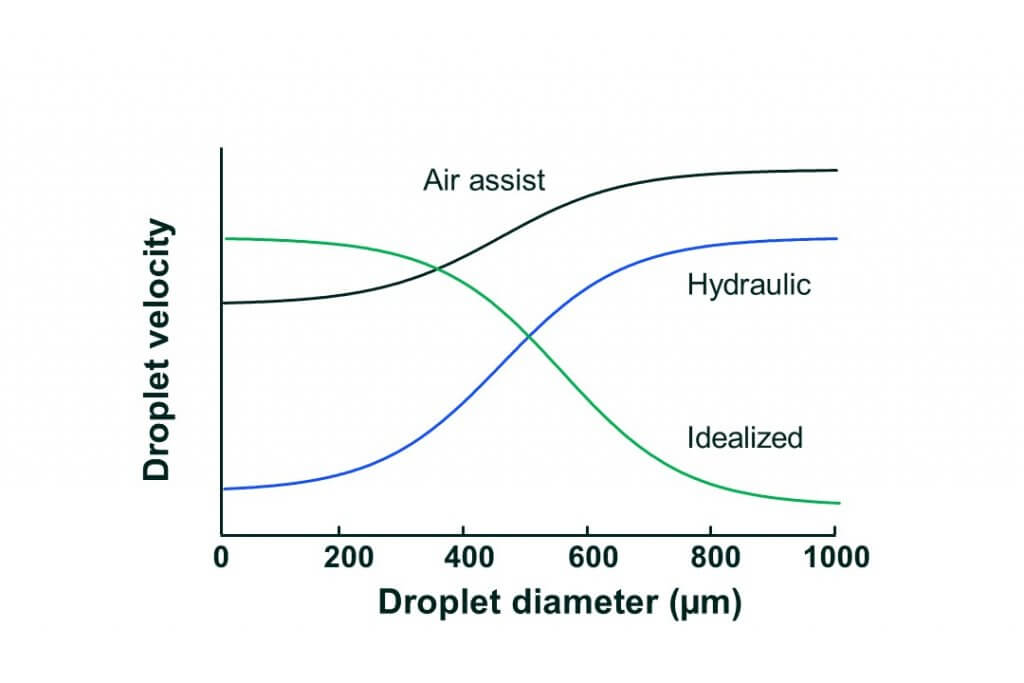
Funny how some issues never go away. For as long as I’ve been in the sprayer business, the question of ideal droplet size for pesticide application has remained a hot topic.  At its root are the basic facts that small droplets provide better coverage, making better use of water, but large droplets drift less.  So […]

Read More… from The Droplet Size Debate

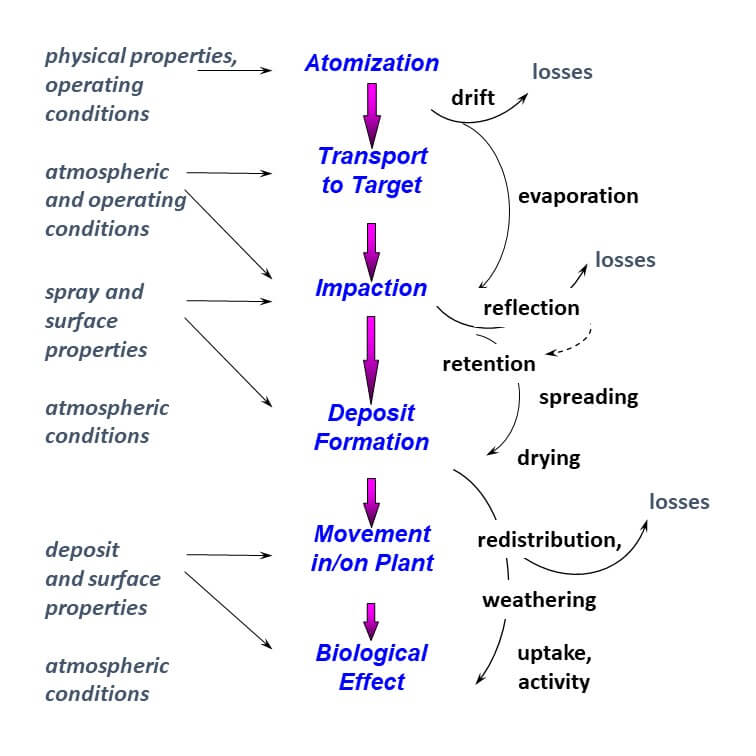
Developing Criteria for the Ideal Agricultural Spray – a Biologist’s Perspective

Originally published in: Wolf, T.M. and Downer, R.A. ILASS Americas, 11th Annual Conference on Liquid Atomization and Spray Systems, Sacramento, CA, May, 1998 Note to reader: It’s been nearly 23 years since we wrote this paper at the invitation of organizers of the Institute for Liquid Atomization and Spray Systems Conference. At the time, custom […]

Read More… from Developing Criteria for the Ideal Agricultural Spray – a Biologist’s Perspective

Perspective on rates, volumes and coverage

This short article is a thought exercise designed to give some perspective on chemical rates, carrier volumes and the foliar area we expect them to protect. Imagine we are spraying the fungicide Captan on highbush blueberry. In Canada, the label rate is to apply 2kg/ha (28.5oz/ac) of planted area. Captan is 80% active ingredient, so […]

Read More… from Perspective on rates, volumes and coverage

What’s the Relationship Between Vapour Drift and Inversions?

Drift symptoms can take a few weeks to be discovered, and to figure out the cause, people need to reconstruct the conditions during the application in question. Wind direction is the easiest. But when we consider factors like inversions, volatility, calm conditions, and others used to explain the movement of pesticides, it can quickly become […]

Read More… from What’s the Relationship Between Vapour Drift and Inversions?