Airblast Nozzles – Reading Nozzle Tables

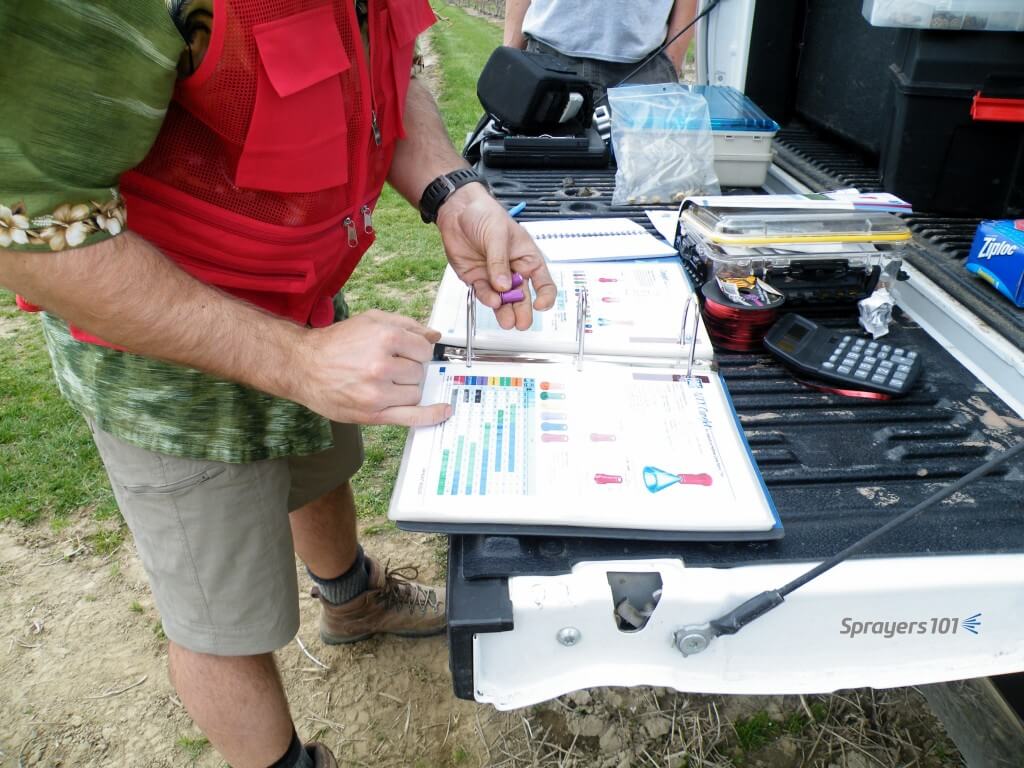
The author looking up nozzle rates during a spring calibration. The operator was running at 190 psi, but the catalogue only listed 180 psi and 200 psi. When span is only 20 psi, it’s fairly safe to approximate the output. When the table only lists in 50 psi increments, it is more difficult to determine the rate without testing the output. This issue usually occurs at pressures above 200 psi, and that’s very high for most horticultural operations. Consider using a lower operating pressure, if possible.

Airblast operators should know how to read a nozzle table. They are found on dealer and manufacturer websites as well as in their catalogs. Table layout varies with brand, but they all relate a nozzle’s flow rate to operating pressure. The better tables also provide the spray angle and the median droplet size (i.e. spray […]

Read More… from Airblast Nozzles – Reading Nozzle Tables

The pressure/spray/coverage relationship

Pressure is integral to nozzle performance. Reducing hydraulic pressure reduces nozzle flow rate, increases median droplet size, and typically reduces spray fan angle. Increasing pressure increases nozzle flow rate, reduces median droplet size and typically increases spray fan angle. You can watch this Exploding Sprayer Myths video to learn how pressure, boom height and nozzle spacing […]

Read More… from The pressure/spray/coverage relationship

Airblast maintenance inspection – the morning walkaround

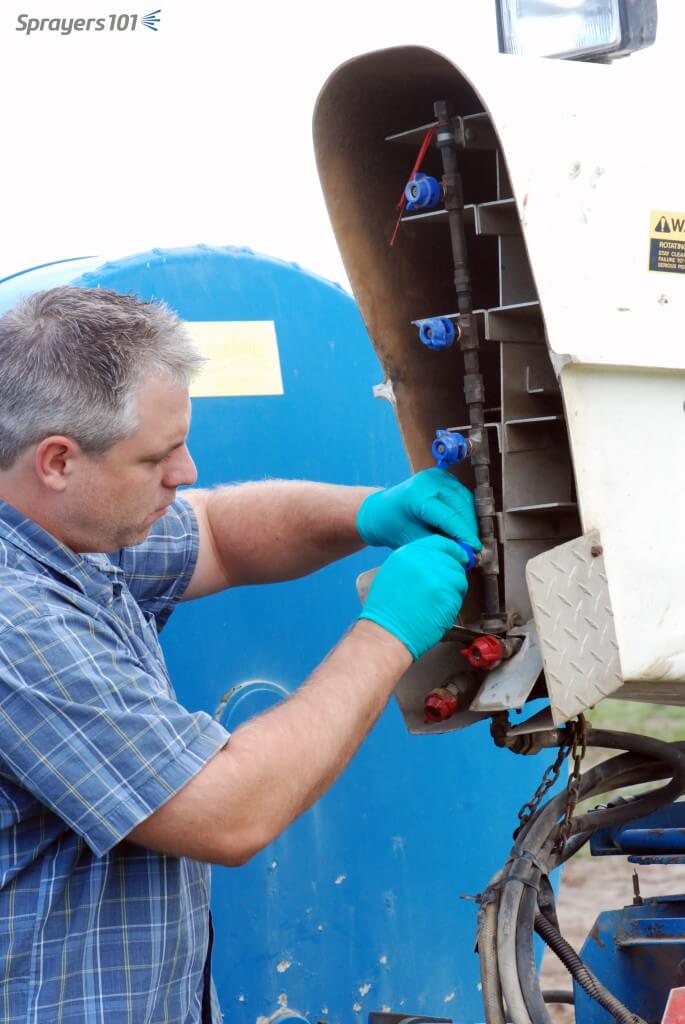
Adjusting the nozzles on a fishtail-style nursery sprayer.

An airblast sprayer inspection is part of preventative maintenance. This daily activity identifies small problems before they become big ones. You can do it at the filling station, so it’s fairly convenient. Don’t think of it as stealing time from your spray day… it’s part of your spray day. Don’t skip it. If time is […]

Read More… from Airblast maintenance inspection – the morning walkaround

Airblast calibration – clearing up confusion

Here are some nasty disc & cores revealed during a calibration workshop. It certainly explained the poor performance the operator was complaining about. Is it time to replace yours? Photo credit – Dr. H. Zhu, Ohio.

“Sprayer calibration is an important part of any crop protection program.” Everyone says so, so it must be important. But what exactly are they asking you to do, and why? When delivering presentations I often take the opportunity to ask audiences to define airblast sprayer calibration. Their responses cover a wide range of activities that […]

Read More… from Airblast calibration – clearing up confusion

Sprayer loading and the jar test

Adding pouches to the basket. Photo Credit – M. Lanthier, British Columbia.

This article was co-written with Mike Cowbrough, OMAFRA Weed Management Specialist – Field Crops The time and attention spent during sprayer loading is a worthy investment. It ensures that the products in the tank perform as intended and reduces the chance of physical incompatibilities. The label Pesticide labels are always the first point of reference. […]

Read More… from Sprayer loading and the jar test