Category: Boom Sprayers

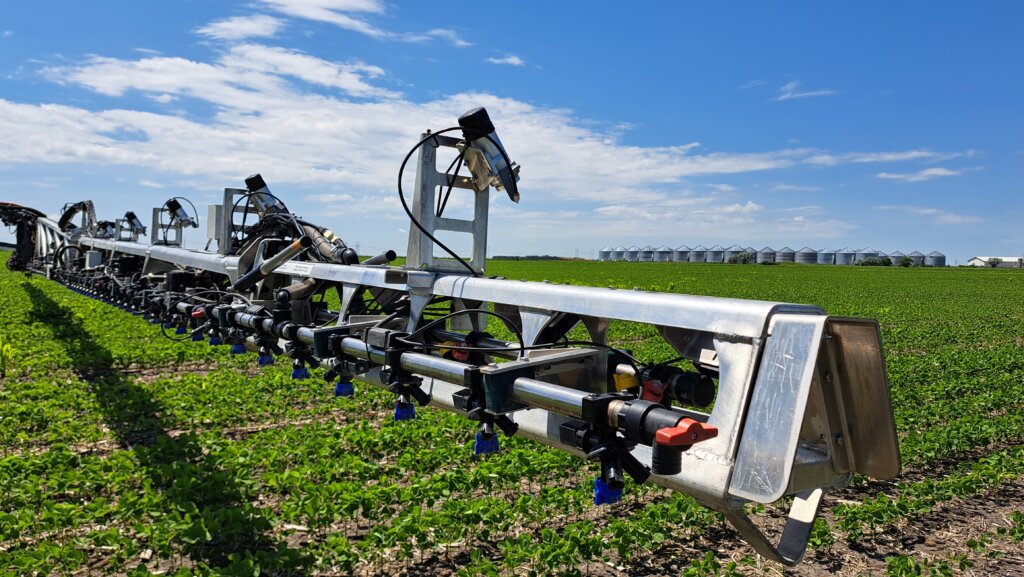
Main category for sprayers with horizontal booms

  • Clean Your Nozzles

    Clean Your Nozzles

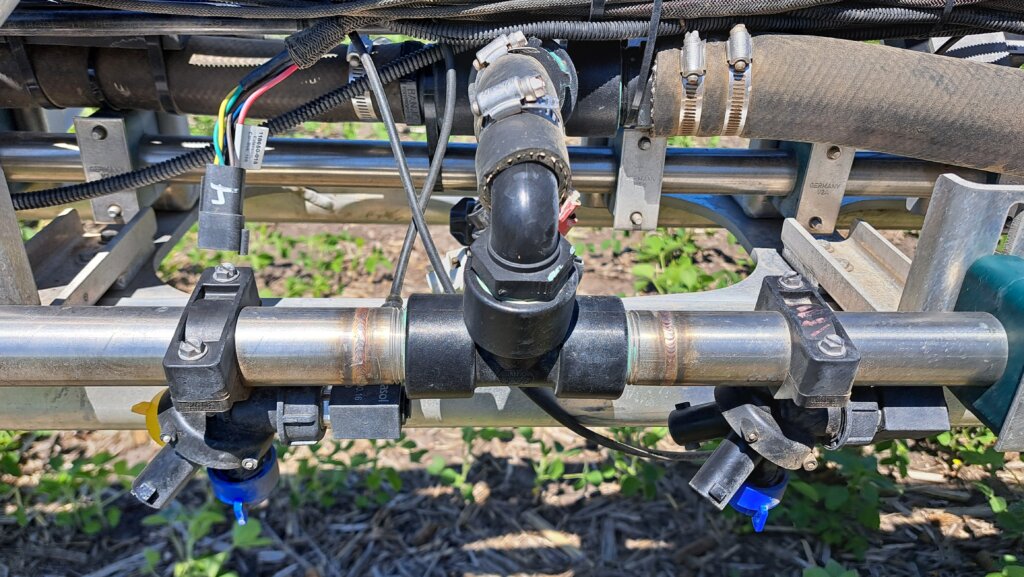
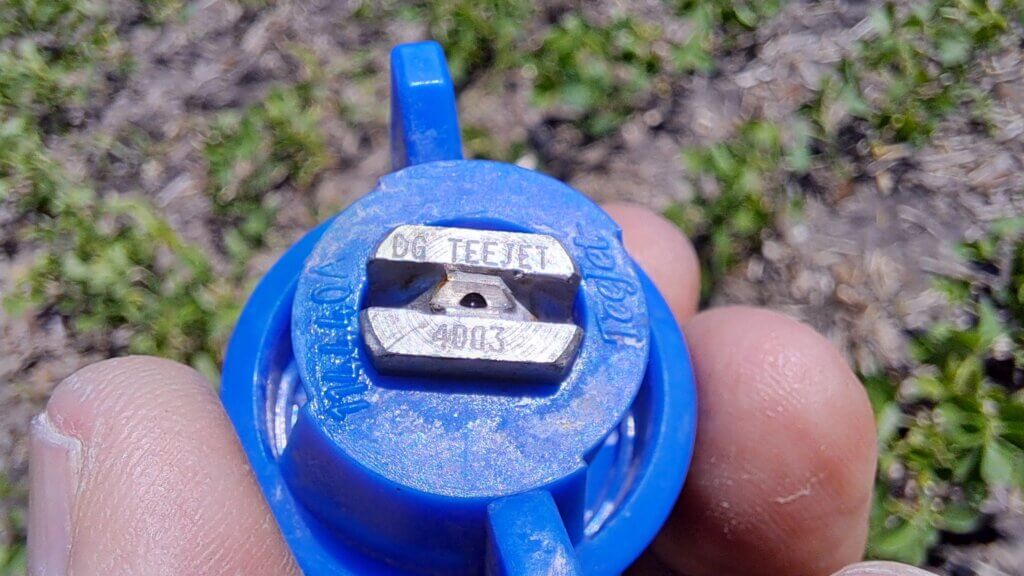
    When operators winterize their sprayers, they should remove all the tips and store them separately. Many store them in large pails with lids. Calibrating the sprayer just prior to winterizing will indicate if the nozzles should be stored, or replaced. Let’s assume each tip flow rate is within 5% of the average output and no more than 5% more than the manufacturer’s pressure tables. Yes, industry standard is 10%, but I always wonder how the spray quality suffers with that much wear. Nozzles are, comparatively, a cheap replacement and it’s not worth skimping. Learn more how to check nozzle flow rate, here.

    Just like any other part of the sprayer that comes in contact with spray liquid, nozzles (and strainers) should be cleaned regularly. And, just like any other part of the plumbing, the best way to do that is to dilute any residues via a series of rinses. For a more rigorous cleaning, one of the intermediate rinses should include a detergent, and soaking during this step is an excellent practice.

    The orifice of any nozzle is delicate, either machined or molded to exacting standards. Even small changes to the orifice shape results in distorted spray (e.g. spray comes out at undesirable angles), a change to the rate (typically more volume per minute) and a change in the spray quality (typically larger median droplet size). If foreign objects or residues remain in the tips, the subsequent spray job may be less accurate and even damage the tips.

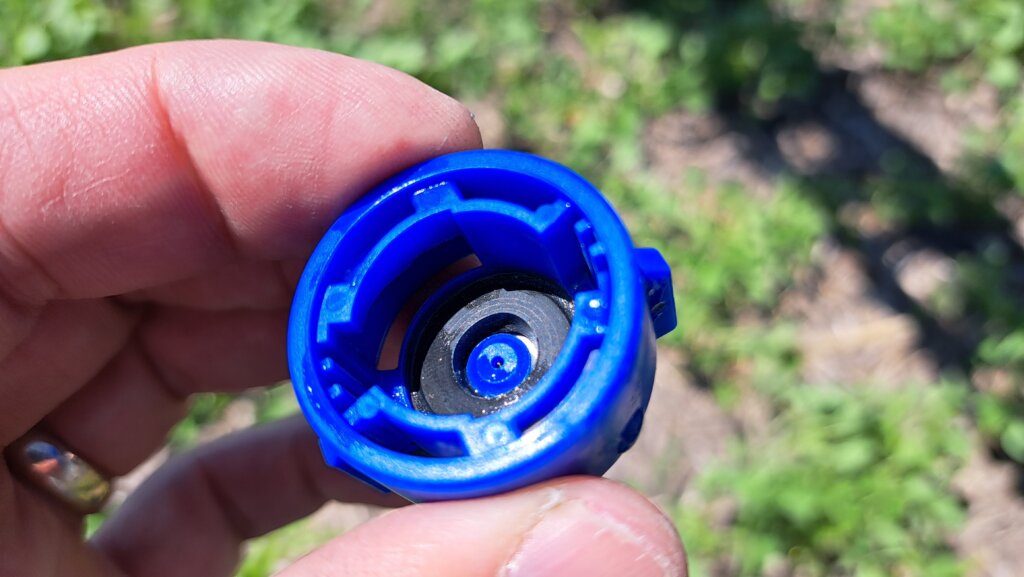
    In the case of air induction nozzles, which are essentially the standard on most boom sprayers, debris and weed seeds can plug the air-intake ports. When that happens, the nozzle will not function as intended. So, while the occasional soaking of nozzles does a great deal of good, they may also have to be scrubbed. Don’t use picks or reamers! There are nozzle cleaning tools out there, but they’re basically toothbrushes so save your old ones (and mark them clearly). Soft bristles are the way to go for removing stubborn residues and cleaning any tip orifices, but we found a nifty new way:

    Occasionally we receive photos like the one below and we’re asked what we think. Well, just the same way we don’t recommend cleaning your sprayer overalls in the family clothes washer, we also don’t recommend the use of dishwashers for nozzles.

    Not a great idea. Certainly not if you intend to ever use this dishwasher for anything else. And where does the rinsate go?

    In an interesting experiment, Lucas Olenick of Wilger tried cleaning tips in a heated ultrasonic cleaner. We haven’t tested this and we don’t know what heat and vibration might do to poly and ceramic components, but surely it’s no more aggressive than hot, soapy water and a bristle brush. Lucas tried several durations with and without detergent and arrived at this recipe:

    “For tough, non-water-soluble pesticides, around 8+ hours in a heated ultra-sonic cleaner with (Dawn) dish soap to come out like brand new. Other solvents may speed this up, but I’d generally suggest against heating solvents at any concentration. For water-soluble pesticides, expect to be within the 3-6+ hours for the first time to be confident enough in not having to flow-test each of the nozzles. With any pesticides, ensure proper care in handling contaminated nozzles and rinsate after cleaning nozzles.”

    The mad genius of Lucas Olenick (@WilgerParts) who used dish detergent and a heated sonic cleaner to unplug tips. Be sure to dispose of rinsate safely. Photo credit: Lucas Olenick.

    Don’t have a heated sonic cleaner? No problem. Here’s a step by step:

    1. Wearing gloves, remove all nozzles, strainers, rubber gaskets and tips from the sprayer.
    2. Put them in a large plastic pail and cover them in warm water. Leave them to soak.
    3. Drain the pail, but be aware that the rinsate will have pesticide residue.
    4. Fill a second pail with a solution of the same commercial detergent used to clean the sprayer.
    5. With a toothbrush, scrub the caps, gaskets, strainers and nozzles to remove any residue. Some nozzles can be pulled apart to expose the mixing chamber and facilitate cleaning.
    6. Once scrubbed, leave all the parts to soak in the detergent solution.
    7. Drain the solution, which will contain trace amounts of pesticide, rinse the parts with water and reassemble the nozzles.

    While you’re at it, drop those filters and scrub them alongside the tips. This may seem extreme, but of all the technology on a sprayer, the nozzle has the biggest impact on the effectiveness and efficiency of the spray job. Take the opportunity over the winter months to clean and inspect the tips for damage so the sprayer is ready for calibration in the spring.

    Soak, scrub, rinse and store nozzles and nozzle strainers. You may replace them once the sprayer is clean, but I prefer to store then separately. Photo credit: Jason Boersma (@RVFBoys), Ridge Valley Farms, Ontario.

    Thanks to Jason Boersma (@RVFBoys), Ridge Valley Farms, Ontario, who sparked this article with his tweet: “Great job for a cold winter day, soak & clean all your tips to be ready for spring also saves on down time!”

  • Spray Drift Basics

    Spray Drift Basics

    This article is intended as a basic overview of what pesticide spray drift is and how to avoid it. If you want a more in-depth study of the physics of drift, head over here.

    Defining Drift

    Pesticide spray drift is the aerial movement, and unintentional deposit, of pesticide outside the target area. Aside from being illegal, there are a lot of compelling reasons for avoiding it. Drift can be measured in financial loss associated with wasted pesticide, wasted time and reduced crop quality/quantity. Plus, if an application is unsuccessful, the operator may have to re-apply, incurring further cost. Pesticide drift increases any risk of damage to human health, susceptible plants (e.g. adjacent crops), non-target organisms (e.g. wild and domestic animals, pollinating insects, etc.), the environment, and property.

    We’ll limit our definitions to two forms of pesticide spray drift: Particle Drift and Vapour Drift.

    Physical Drift is the initial off-target movement of pesticide droplets. This occurs at the time of application, and it is generally on a scale of tens-of-metres. There is a secondary component to physical drift wherein particularly small droplets (or the evaporated remains of droplets) stay aloft for longer periods of time, during which they can move laterally with wind or vertically with thermals and turbulence.

    Vapour Drift is the off-target movement of pesticide vapours. This is a function of product chemistry (vapour pressure) and surface temperature. Rainfall (rewetting) can also affect vapour loss. If vapour gets caught up in a light breeze, moves downhill during a thermal inversion, or is redistributed in precipitation, movement is can be on a scale of kilometres.

    Managing Drift

    Drift cannot be entirely eliminated, but sprayer operators can greatly reduce the degree and impact. Much of what follows relates predominantly to particle drift from horizontal boom sprayers, but it’s never wrong to follow these best practices. Research and modeling have shown that the three biggest factors under the operator’s control are:

    • Apparent wind speed (i.e. the sum of wind speed and travel speed)
    • Boom height (i.e. release height)
    • Droplet size (i.e. nozzle spray quality)

    Therefore, the degree and impact of drift can be greatly reduced by following these guidelines:

    • Reduce the distance between nozzle and target. For a herbicide application, that means lowering the boom to the lowest practicable height. There are exceptions, but a good rule of thumb is that the boom height should be approximately the same as the nozzle spacing.
    • Use the coarsest effective droplet size, generally achieved through the use of drift reducing nozzles such as air induction.
    • Work with the weather.  Labels will specify appropriate weather conditions for spraying. Change sprayer settings to account for hot, dry and windy conditions or halt the job until conditions improve. Generally, avoid spraying when the weather is against you.
    • Identify any vulnerable nearby crop, landscape or environmental area. Choose a spray day when winds are blowing away from these sites. Explore voluntary watchdog sites like DriftWatch to see if there are registered sensitive crops nearby. Planting windbreaks or utilizing riparian areas can also help manage wind and provide localized downwind protection.
    • Observe labelled buffer zones and recommended sprayer settings. In Canada, using optimal sprayer settings in the right environmental conditions may reward the sprayer operator with buffer-zone reductions.
    • Work with your neighbours.  Let them know your intentions. For example, greenhouse growers need to be notified to close vents during morning spray times to avoid any possibility of drift.
    • Understand the potential damage off-target herbicides can cause and make this part of your planning when selecting a herbicide. Where possible, choose herbicides with a low risk of volatility. Avoid products like dicamba near susceptible crops (grapes, tomatoes, peppers, sweet potato, tobacco, IP soybeans, etc.) or greenhouses. While not necessarily volatile, other synthetic auxins such as 2,4-D are extremely damaging to horticultural crops at very, very low doses.
    Buffer zones or No-Spray zones physically separate the end of the spray swath for the nearest downwind sensitive area.
    Buffer zones or No-Spray zones physically separate the end of the spray swath for the nearest downwind sensitive area.
    Consider planting windbreaks between your operation and sensitive downwind areas. Be aware that the windbreak should filter pesticide-laden air, not block it completely (~50 % porosity). Also be aware that there are potential impacts to nearby crop rows, such as creating shade as well as cool, still air conditions. Contact your local Nature Conservancy to discuss the right plants and management plan for you.
    Consider planting windbreaks between your operation and sensitive downwind areas. Be aware that the windbreak should slow and filter pesticide-laden air, not block it completely (~50 % porosity). Also be aware that there are potential impacts to nearby crop rows, such as creating shade as well as cool, still air conditions. Contact your local Nature Conservancy to discuss the right plants and management plan for you.

    Running an Airblast Sprayer?

    For airblast sprayer operators, the environmental factors that affect drift are the same, but the rules for optimizing sprayer settings are slightly different. Droplet size is less of an issue, and in some cases droplet size cannot be controlled. Air settings are the primary tool for reducing drift potential.

    • Adjust fan settings to produce the minimal effective air speed throughout the season.
    • Use deflectors to channel air into, not over or under, the target.
    • If possible, increase droplet size by using air induction nozzles or disc & core (or disc & whirl) nozzles that produce a coarser droplet size. Depending on canopy size, you could use them in every nozzle position, or only in highest nozzle positions.
    • Any sprayer design the brings nozzles closer to the crop (e.g. tower or wrap-around designs) will reduce drift.
    • Canopy sensors that turn boom sections on and off to match the size and shape of the canopy will reduce drift.
    It’s not only field sprayers that drift. Photo Credit – G. Amos and D. Zamora, Washington State.
    It’s not only field sprayers that drift. Photo Credit – G. Amos and D. Zamora, Washington State.
    Monitoring airblast drift using a tall pole with water-sensitive papers stapled along the length. This trial was run using only water so as not to expose the person holding the pole. Photo Credit – M. Waring, British Columbia.
    Monitoring airblast drift with ribbons and a tall pole with water-sensitive papers stapled along the length. This trial was run using only water so as not to expose the person holding the pole. Photo Credit – M. Waring, British Columbia.

    If You Suspect Drift

    If you suspect your crops or property have been damaged by pesticide drift, follow these steps (The contact info is specific to Ontario, so substitute your local authorities). The following information is based on this article in ONFruit which focuses on herbicide drift. Drift onto an organic operation would not necessarily cause visual injury, but steps are similar.

    1. Diagnose the problem

    • Is there evidence of a spray application (agricultural or vegetative management such as roadside spraying)?  Look for wheel tracks, weed symptoms, boom patterns and overlap on the headlands. Look for spray evidence in neighbouring fields, lawns, ditches, etc.
    • Familiarize yourself with the symptoms of drift injury on your crops.
    • Eliminate other possible causes. Disease, insects, nutrient deficiency, herbicide carryover, improper sprayer cleanout, and environmental stress can resemble drift injury.
    • Are there damage patterns? In the case of physical drift, damage is more pronounced on the upwind side of the damaged area, tapering away with distance from the source. In the case of vapour drift, damage can be uniform throughout damaged area and not necessarily downwind from the source. Pesticides can also move in cold air drainage and in surface run-off from rain events. If damage is patchy, it may be something else, such as soil pH or carryover (look where sprayer starts and stops).

    2. Contact the appropriate people

    • Talk to your neighbour or the sprayer operator. Ask what was sprayed, when it was applied and who performed the application.
    • Contact the Ministry of the Environment, Conservation and Parks District Office or Spills Action Center (SAC): 1-866-663-8477. The SAC is available 24/7 and they will then contact the appropriate Environmental Officer and pesticide specialist in your region. Local MECP offices can be found here.
      • It is extremely important to report as soon as possible because the concentration of herbicide drops quickly within the plant.  Do NOT wait until there are symptoms. Do NOT hesitate to call, even if you are unsure if it’s pesticide drift.
    • MECP officers can do a site visit, take samples of tissue and soil, and have them analyzed for suspect pesticides. Where appropriate, the offending applicator may face charges under Ontario’s Pesticides Act. Charges will be pursued only if off label use is identified from the information gathered.
      • Because of the wording of some of the labels and the difficulty of tracking down all the information needed, this has always been a very difficult thing to pursue in grower-to-grower drift incidents. 
      • The results from the MECP lab are available for the grower and, if enough information is collected, the grower is encouraged to pursue civil court if insurance and/or cooperation with the applicator does not work. According to the label of most pest control products, the applicator is liable for any damage caused by the misapplication of a pesticide.
    • Contact your (crop) insurance adjustor and advise the applicator to contact theirs. However, do not rely on your crop insurance; Insurance companies may not provide coverage for drift incidents. It is prudent to determine if you are covered before you need to file a claim.
    • Report the incident to the PMRA Voluntary incident reporting system
    • Report the incident to the manufacturer of the pesticide product. See the label for the toll-free number. Labels can be found on the PMRA label search.

    3. Document all details of the problem and consider lab analysis

    • Collect spray records. This includes yours (to ensure it was not your application), and the potential offending applicators’.
    • Collect weather records (temperatures, possible temperature inversions, wind speed, wind direction, rainfall) for the date of application).
    • Take timestamped, geolocated photos (most smartphones include this information automatically, but check your settings). Repeat photos several times through the season.
    • Document yield loss from the damaged area and an undamaged area. Choose a similar planting (same age, cultivar, rootstock, etc.). For perennial crops (e.g. vineyards, orchards, asparagus, berries) herbicides such as Group 4’s may necessitate documenting the effects for several years after the damage occurred.
    • Laboratory analyses of herbicide levels in plant tissue are often necessary to confirm the presence of herbicides, although symptoms may be helpful in diagnosing which herbicides caused the problem.
      • Research laboratories that will analyze crop samples for herbicide residues. Their requirements regarding sample size, labeling, storage, and shipping will vary, as will the list of pesticides they provide testing for and their minimal detection levels. Given the time-sensitive nature of pesticide detection, it would be prudent to know this information before need the service.

    Applicator Liability

    Anyone using pesticides is responsible for their safe application. For example, the Ontario Pesticides Act requires that licensed spray applicators carry a specialized liability insurance policy that provides appropriate coverage for their business. Operators who work on a “for hire” basis (e.g. a licensed spray applicator) or away from their own farm operation will need additional coverage. Where drift damages adjacent crops, insurance adjustors generally ask the following questions:

    • Was the damage to the applicator’s own crop? If so, it is unlikely that there will be coverage under any insurance policy.
    • Was the damage to a neighbour’s property? If so, the applicator’s liability policy may respond.
    • Was the product being applied according to label directions?

    Other Resources

    Managing spray drift is everyone’s responsibility. Extremely low, and often invisible, amounts of spray drift can be very damaging; even long after the application. For more information about drift mitigation, watch the following videos and download a copy of this Factsheet

    What is Pesticide Drift?- Ontario Ministry of Agriculture and Food and Ministry of Rural Affairs (2011)

    Equipment and Methods to Reduce Pesticide Drift- Ontario Ministry of Agriculture and Food and Ministry of Rural Affairs (2011)

    Preventing Pesticide Spray Drift- University of Missouri Extension (2013)

    Three simple ways to reduce drift. Thanks to Real Agriculture for filming and editing! (2014)

    Three simple ways to reduce drift. Thanks to Real Agriculture for filming and editing! (2014)

  • Pro Tips for Pre-Harvest and Desiccation Sprays

    Pro Tips for Pre-Harvest and Desiccation Sprays

    A version of this article was originally written by @nozzle_guy as a guest blog for Farm At Hand, and is reproduced with permission.

    One of the smartest decisions a grower could make is to consider a late-season harvest-aid application. Particularly in years with thinner stands, weeds can maintain a foothold. Late season moisture can give new life to late emerging plants or branches.  When the crop is ready to cut, this could mean all sorts of cutterbar, pickup reel, feederchain, and sieve headaches.

    A desiccant or pre-harvest herbicide application can help avoid those problems.  The challenge is to get the spray into, or through, a mature crop canopy.  Here are some pointers to do it right.

    1. Evaluate where within the canopy the spray needs to go to do its job. If you’re considering a pre-harvest herbicide, are you looking to control dandelions or buckwheat near the bottom of the canopy, or are you trying to get thistles or quackgrass, whose leaves are near the top? If you’re mostly trying to accelerate drydown with a contact product, where in the canopy are the green stems and leaves that you need to contact?
    2. Take a bird’s eye view of your canopy. That’s how the spray sees it.  If you can clearly see your target, the spray application is pretty straightforward because most droplets will make their way there easily. But if the target is obscured by a lot of foliage, or if it’s vertical, the job is much more challenging and will require some combination of more water, slower speeds, angled tips or finer sprays.
    3. To hit plant parts that you can’t see, one of the main tools is finer sprays. The smaller droplets have an easier time changing direction to get around obstacles like leaves, and they are also much more likely to be intercepted by petioles and stems, and to stick to them. This can be both an advantage and disadvantage – for example, the awns in bearded cereals are notoriously effective at capturing the smallest droplets before they can do any good further down.  If you don’t want to install a different nozzle to get a finer spray, simply increase the spray pressure of your low-drift nozzle to 80, 90, even 100 psi.  This will create enough fine droplets. But don’t expect the higher pressure to push the spray into the canopy.  Only air-assist can do that.
    4. To get more spray deeper into the canopy, slow down, add water, and point nozzles backward. The backward orientation helps offset the forward travel speed, giving the droplets a slower net forward velocity that helps their downward movement.
    5. If you’re using contact products like diquat, paraquat, saflufenacil or carfentrazone, use generous amounts of water, and slightly finer sprays. Make sure that spray drift control remains a priority and pay attention to water quality.
    6. Test your water and make sure your water doesn’t have turbidity (suspended clay or other organic matter), for glyphosate and diquat or paraquat, and hardness, for glyphosate. Aluminum sulphate can help get rid of turbidity in a pond, but it takes time (treat turbid water at least 24 to 48 h before you need it).  If treating a storage vessel, expect a layer of sediment. Ammonium sulphate (AMS) and other water conditioners can remove antagonizing hard water ions like magnesium and calcium. This is especially important as we increase water volumes with glyphosate to get better coverage. The higher water volumes give a concentration advantage to the hardness minerals.
    7. Diquat and paraquat’s mode of action benefits from being applied in the evening. The absence of the sun allows it to be taken up and slightly moved (by diffusion, not true translocation) within the leaf before morning sunlight activates it. Once activated by the sun, these products exert their activity and movement stops. If you’re not careful, the tighter window of evening-only applications could get you behind. And of course, be aware of the signs of inversions and know when to quit.
    8. Plan ahead and make sure you give yourself enough time, because to do the job right you’ll be using more water and driving a bit slower. Focus on productivity tools like a fast, efficient fill to make up the lost time.

    A good job with a pre-harvest herbicide or a harvest-aid can save many harvesting headaches, and can help dry down during less than ideal conditions. It’s another reason why the sprayer may be the most important implement on the farm.

  • Spraying Weather

    Spraying Weather

    It’s time to spray and what’s the first thing you do? Check the weather forecast, of course. More often than not, the suitability of the weather is the main factor in the decision to spray. Let’s have a closer look at what each weather component contributes to the decision.

    Wind:

    Everyone knows that small droplets can drift if it’s windy, and the windier, the worse it is. But that’s hardly the whole story.  Here’s how can we improve our understanding of wind and its impact.

    • Look beyond the wind forecast. It’s standard practice to look a day or two ahead for wind forecasts. At any instant, the wind speed and direction may be acceptable for our planned spray job, but we know that it will change. Consider wind speed sites such as Windfinder, Ventusky, or Windy for added insight. These services show trends over time in a great visual interface, allowing users to anticipate changes in wind speed and direction for better planning. While they aren’t forecasts per se, visualizing wind patterns over a larger region allows a better understanding of what’s coming your way.
    Figure 1: Sites such as Windy.com offer powerful visualizations of current and future wind conditions.
    • Use wind as an ally. We’re conditioned to think of wind as having a negative effect on spray drift. The less the better. Yes, droplet displacement increases with wind speed. But the “negative-only” perspective is being re-evaluated in light of dangers associated with wind-free conditions that often occur during temperature inversions (see “Temperature”, below). In fact, wind provides several advantages over calm conditions:
      1. Directional certainty. We can assess the risk to downwind sensitive areas. This is not possible with calm conditions because inversion air flow may follow terrain, and as inversions dissipate, the first daily winds can be changeable and unpredictable in direction.
      2. Turbulence. Wind creates mechanical turbulence which helps sprays deposit and disperse.  Both of these effects have value. In a calm environment, such turbulent eddies don’t exist.
      3. Low drift options. If it’s windy, we have options to respond. We can lower the boom or lower the spray pressure. We can mix the next tank in higher water volume, forcing either a larger nozzle (larger flow rates of the same model nozzle usually produce coarser sprays) or slower travel speeds. All these practices reduce drift when it’s windy. In comparison, nothing (except not spraying) can be done to reduce risk during inversion conditions. This is because even low-drift spray contain enough fine droplets to cause damage if they linger.
    • Know your wind speed. The international standard for wind speed measurement is 10 m above ground level. When 25 km/h wind speeds are reported, they are at 10 m, not the 1 m height where the boom is located. Within the surface boundary layer, the part of the atmosphere closest to the ground, wind speeds typically increase linearly with the natural log of the height above the canopy. The slope of that line depends on atmospheric stability and roughness length. Very close to the ground, the wind speed reaches zero, and that height is a function of the roughness of the surrounding terrain.

      As a rule of thumb, over a short crop canopy, expect the wind speed at 1 m above ground to be about 0.67x of the speed at 10 m. So if the weather reports 25 km/h, the actual wind speed at boom height is closer to 17 km/h. Remember that weather stations can be far away, and local conditions will vary. Always measure your local wind speed and direction with your own weather station or handheld device, and keep a record.
    Figure 2: Relationship of wind speed and height, for three roughness conditions (Source: Oke et al, 2017)
    Figure 3: Hand-held wind meters or weather stations are an essential part of a spray operation and record keeping.

    Wind and Mode of Action. Coarser sprays are a common way to reduce drift in windy conditions. But some modes of action aren’t well suited to coarser sprays. We can schedule our spray jobs throughout the day to correspond to spray quality tolerance. Apply the products that require the finest sprays (contact products, grassy herbicides, insecticides) when conditions are best, and save the sprays that tolerate the coarser sprays (systemic products, broadleaf targets) for less certain conditions later in the day. Or treat the fields whose downwind edges border a sensitive crop during better conditions. Here’s a rough guide to spray quality and herbicide mode of action.

    Temperature

    Like wind, air temperature is more complex than it appears at first sight. Here are some other aspects to consider:

    • Understand temperature inversions. Temperature matters. But perhaps the most important aspect of temperature when it comes to spraying isn’t the temperature per se, but how it changes with height. The temperature change with height is used to identify dangerous temperature inversions.

      Here’s how temperature profiles work (for a quick Sprayers101 overview, here, for the best in-depth explanation (NDSU), here): Due to atmospheric pressure, there is always a slight temperature decrease with height, about 1 ºC per 100 m (the dry adiabatic lapse rate). This temperature profile describes a “neutral” atmosphere, i.e., no thermal effects.

      When it’s sunny, solar radiation heats the earth, which in turn warms the air near it. As a result, the rate of cooling with height is greater than the adiabatic lapse rate, and we have “unstable” conditions that are characterized by thermal turbulence (warm air rising, cold air falling) that actively mixes air parcels. Thermal turbulence is very good at dispersing anything in the air, including spray droplets.

      When solar radiation is low or absent, the earth cools and this mostly affects the air near it. As a result, air temperature rises with height, and the daytime temperature / height profile is inverted. Air parcels no longer move up or down, in fact they return to their original location if displaced. This results in a “stable” atmosphere, also called an inversion.

      Inversions are dangerous because they are associated with very low dispersion, and a spray cloud will remain concentrated and may linger over the ground for a long time, like ground fog.

      Most weather services do not actively measure inversions. Instead, their presence has to be inferred by clues. For example, inversions:
      (a) occur primarily when solar radiation is low, from early evening, overnight, to early morning;
      (b) are more likely on clear nights, when soils cool more;
      (c) can be seen when ground fog is present, or when dust hangs, moving slowly;
      (d) are associated with low ground temperatures that also cause dew. 

    Recent findings about inversion in Missouri were summed up in this excellent webinar by Dr. Mandy Bish, Extension Weed Specialist at the University of Missouri. Her studies showed that inversions can begin hours before sunset, their presence and duration are dependent on local conditions such as topography and windbreaks, and recognition of telltale signs of inversions such as lack of windspeed are important for accurate local assessments.

    Figure 4: Morning ground fog in Australia (picture provided to author).
    • Use Mesonets if you have them. Mesonets are networks of weather stations, and they can add valuable information. For example, North Dakota has an extensive network of about 130 weather stations that, among other things, measures and reports temperature inversions. NDAWN (ndawn.ndsu.nodak.edu) reports temperatures at 3 m and 1 m, and issues warnings of temperature inversions as they develop at a specific location. NDAWN information is available as an app. North Dakota isn’t the only place to have a public mesonet, check to see what’s available in your area. The added information is worth subscribing to.
    • Know the volatility of the product. Some pesticide active ingredients are volatile. This means they can evaporate from a wet or dry deposit during and after application (more here). Dicamba is a prominent example, but there are others, like trifluralin and ethalfluralin, 2,4-D and MCPA ester, and clomazone. Formulation can affect volatility, and the use of lower volatile esters of 2,4-D and better salts of dicamba have helped. Microencapsulation has been used to reduce the problem with clomazone. Volatility is strongly affected by surface temperature, and volatile products should not be sprayed on hot days or when the forecast calls for hot days following application. Volatile products have been found to evaporate from dry deposits for several days after application, and their vapours move under inversion conditions, causing widespread damage.

    Sun

    The sun plays a large role in spraying. Plants’ active growth improves herbicide translocation as well as activity in the photosystem, or in amino acid or fatty acid synthesis. The activity of herbicides has been shown to improve under sunny conditions for that reason.

    Some herbicides, most notably diquat (Reglone), work too quickly when it’s sunny, and improved performance can be gained by spraying under cloudy or low-light conditions. The lack of photosynthesis allows for some passive translocation before the product causes tissue necrosis.

    Sunny conditions also increase thermal turbulence we mentioned earlier, which is useful for burning off morning inversions. But what usually follows a sunny day is a strong inversion as the sun sets and the clear sky facilitates the earth’s rapid cooling. It would be possible to spray a bit later into the evening when it’s cloudy.

    Humidity

    Since about 99% of the spray volume is comprised of water, evaporation of this water can have strong effects on droplet behaviour. Droplets begin to evaporate as soon as they leave the nozzle, becoming smaller and more drift-prone while still in flight. Higher booms and finer sprays increase the flight-time of droplets, and this increases the sensitivity to evaporation.

    The most common measure of water in air is relative humidity (RH). RH doesn’t tell the whole story, though, because the same RH at different temperatures results in two different rates of water evaporation. A better measure is wet bulb depression. Wet bulb depression is defines as the difference in temperature reported by a dry bulb vs. a wet bulb thermometer. Wet bulb depression has more recently been coined as “Delta T” in Australia. The Delta T value is directly related to water evaporation, and charts have been published showing acceptable values for spraying. A Delta T of >10 ºC is considered too high.

    Figure 5: Delta T, also known as wet bulb depression, provides an indication of water evaporation rate.

    After they deposit on a leaf, droplets can evaporate to dryness within seconds, and a dry atmosphere can result in rapid drying that reduces herbicide uptake. In one study, a Group 2 herbicide was applied to weeds in a normal sized spray, and also as a fine mist, both under very dry conditions. The normal spray showed the expected herbicide efficacy. The finely misted herbicide had no effect on the weeds, likely because the rapid drying prevented uptake. Interestingly, the product began to work again when the plants were later placed in a humid environment.

    High humidity can also work against an application. Since humidity is often high during temperature inversions, droplets remain potent while they linger and drift over sensitive terrain. It would be better if they had evaporated and lost their effectiveness.

    Some proponents of low water volumes and fine sprays have suggested oily formulations or adjuvants prevent evaporation. While this may slow evaporation, it also creates a dangerous condition in which many small droplets remain aloft and liquid for a long time, with high activity on any target they may encounter. The bottom line: Don’t spray low volumes with oily adjuvants.

    The Perfect Day

    We know that the ideal spray day is sunny, starts a few hours after sunrise once the dew has mostly burned off, and has consistent winds away from sensitive areas. Spraying should end well before before sunset, before calm conditions signal the onset of the inversion.

    But what to do when that day never happens? All too often, high winds persist day after day, and night spraying is the only alternative. In that case, do what you can to minimize potential damage. Survey downwind areas. Choose cloudy skies that suppress inversions. Incoming weather systems are usually associated with consistent winds, and these may reduce inversion risk. If drift is a possibility, apply more water and use the coarser nozzles at your disposal to minimize it. Any investments made to boost productivity will pay dividends, allowing you to get a greater proportion of your work done when conditions are better.

    Additional Resource

    If you want an excellent resource for spray weather best practices, grab a free copy of Graeme Tepper’s “Weather Essentials for Pesticide Application” published by Australia’s GRDC.

  • Spray Coverage in Field Tomato

    Spray Coverage in Field Tomato

    Spraying field tomato is difficult – period.

    In Ontario, early variety tomato canopies get very dense in July. The inner canopy is relatively still, humid, cool and a perfect environment for diseases such as late blight. It is challenging to deliver fungicides to the inner canopy and this can lead to inadequate disease control. Matters are slightly improved as the fruit grows and pulls the canopy open, and staked tomatoes might allow for the use of directed sprays, such as drop arms in staked peppers. But, there’s no getting around it – from a droplet’s perspective, it’s tough to get through the outer canopy.

    DSCF0002
    Imagine you are a spray droplet trying to get inside this canopy.

    Study 1 – Qualitative Observations

    In August, 2011 we worked in a market garden operation in Bolton comparing the spray coverage from four different nozzle configurations. We used the growers typical spray parameters: a travel speed of 4.5 km/h (2.8 mph), an operating pressure of about 4 bar (60 psi), a boom height of 45 cm (18 in) above the ground, and a sprayer output of 550 L/ha (~60 gpa). To monitor spray coverage, water sensitive paper was placed face-up in the middle of the tomato canopy. This diagnostic tool turns from yellow to blue when contacted by spray.

    Water-sensitive paper at top of tomato canopy - easy to hit.
    Water-sensitive paper at top of tomato canopy – easy to hit.

    This particular sprayer was equipped with an air assist sleeve that blew a curtain of air into the canopy at about 100 km/h (65 mph) as indicated by an air speed monitor placed at the air outlet. When properly adjusted, air-assist booms have a number of benefits:

    • They part the outer canopy giving spray access to the inner canopy.
    • They rustle leaves to expose all surfaces to spray.
    • They permit the use of smaller droplets, which are more numerous and adhere to vertical surfaces, by entraining them and reducing drift.
    • They extend the spray window by permitting the applicator to operate in slightly higher ambient wind speeds.
    Boom sprayer with air assist sleeve operating.
    Boom sprayer with air assist sleeve operating.

    We sprayed using the four different nozzle configurations, with and without air assist. Our goal was to make qualitative assessments (Good, Moderate, Poor), and here’s what we observed:

    Nozzle Type / Sprayer OutputWith Air AssistWithout Air Assist
    80 degree flat fans /~550 L/ha (60 g/ac)
    • Good coverage in upper canopy
    • Poor / Moderate canopy penetration
    • Low drift
    • Good coverage in upper canopy
    • Poor canopy penetration
    • Moderate drift
    80 degree air induction flat fans /~550 L/ha (60 g/ac)
    • Inconsistent upper canopy coverage
    • Poor canopy penetration
    • “No” drift
    • Inconsistent upper canopy coverage
    • Poor canopy penetration
    • “No”/Low drift
    TwinJet dual 80 degree flat fans /~550 L/ha (60 g/ac)
    • Good coverage in upper canopy
    • Poor / Moderate canopy penetration
    • Moderate Drift
    • Good coverage in upper canopy
    • Poor canopy penetration
    • Moderate/High drift
    Hollow cones /~750 L/ha (80 g/ac)
    • Good coverage in upper canopy
    • Moderate canopy penetration
    • Low drift
    • Good coverage in upper canopy
    • Poor canopy penetration
    • Very High drift

    The air induction nozzles performed poorly. Their Coarse/Very Coarse droplets impacted on the outer canopy, created run-off and resulted in very little canopy penetration. Medium droplets produced by twin fans and conventional flat fans were both inconsistent with inner-canopy coverage, but some advantage may have been observed with air assist. The TwinJets contributed to higher drift (likely because they were too high off the canopy) but otherwise produced coverage similar to the conventional flat fans. From these observations, the convention that spray shape (e.g. cone, fan, twin) has little or no impact on broadleaf canopy penetration holds true.

    Acceptable spray coverage deep in canopy (harder to hit) using hollow cone nozzles.
    Acceptable spray coverage deep in canopy (harder to hit) using hollow cone nozzles and air assist.

    After inspecting the papers deep in the canopy, we were surprised that air assist did not obviously improve canopy penetration. It did seem to help, but it wasn’t a slam-dunk. This may be because finer droplets (<50µm) are not easily seen on water sensitive paper. It might also be because we did not calibrate the air speed to the canopy: too little air and spray impacts on the outer canopy, while too much air forces leaves out of the way and spray is blown into the ground. It was obvious that drift was greatly reduced, so logically the spray had to have gone somewhere – we can only assume it entered the canopy.

    The best results were achieved with hollow cones and air assist. Theoretically, smaller droplets should improve the potential for coverage by sheer number, but they slow quickly and are easily blown off course. Winds were only about 5 km/h (3 mph) during the trials. Had they been higher, the no-air-assist condition would have resulted in poorer canopy coverage. While we feel the air assist improved inner canopy coverage, we attribute much of the performance to the spray volume of 750 L/ha (80 gpa), which was significantly higher than we used with the other nozzles. When we attempted lower volumes using the hollow cones (not shown) the inner canopy coverage was greatly compromised. Higher volumes are a demonstrated means for improving canopy penetration, so this observation is consistent with what was expected.

    The 2011 trial suggested that hollow cone tips used with high volume and air assist, improved canopy coverage and penetration. They are, however, very prone to drift and their use is not recommended without an air assist sleeve to counter the spray drift. Spray volumes over 500 L/ha are highly recommended.

    Study 2 – Quantitative Observations

    In July, 2016 we ran another study in Chatham-Kent. This operation was concerned about spray drift and recently changed from Hardi hollow cones on 25 cm (10″) centres to TeeJet Turbo TwinJets on 50 cm (20″) centres. They wanted to know if they had improved their coverage. We decided to test four nozzles at similar driving speeds and volumes.

    Once again, we used water-sensitive paper. This time we placed two pieces back-to-back (face up and face down) about 1/3 down into the canopy. Then we placed two more in the same orientation about 2/3 down into the canopy. We did this for three plants for each pass. The next four images show the visual drift and weather conditions for each nozzle. Note that only one boom section was nozzled (indicated by a white line) in each condition.

    Condition 1 – Turbo TwinJet (Coarse Spray Quality)

    2016_Tomato_Sprayers_TTJ

    Condition 2 – Hollow Cones (10″ centres – Fine/Medium Spray Quality)

    2016_Tomato_Sprayers_hollowcone

    Condition 3 – XR 110° FlatFan (Fine Spray Quality)

    2016_Tomato_Sprayers_XR

    Condition 4 – TeeJet 3070 (Coarse Spray Quality)

    2016_Tomato_Sprayers_3070

    It was very humid, making it difficult to place and retrieve the papers without smearing them. This made it tricky to discern differences in coverage, and the blurring prevented us from quantifying droplet density (i.e. number of drops per unit area). Nevertheless, papers were scanned and the percent coverage was calculated using the DepositScan software developed by the USDA’s Dr. Heping Zhu. The average percent-coverage (± S.E. n=3) is shown in the image below.

    2016_Tomato_Sprayers_Coverage

    Coverage on the upward-facing papers in the upper portion of the canopy showed excessive coverage for all nozzles but the 3070. Little or no coverage was detected on the downward-facing cards, but without air-assist or a directed application (e.g. drop arms), this was expected. It’s the deeper canopy that’s of particular interest. The only significant difference may lie in the XR flat fan which showed more coverage on the upward facing papers and some (however little) on the downward facing papers.

    This came as something of a surprise given that the XR produced a Fine spray quality and there was no air assist to guide spray into the canopy. I believe the high humidity and low winds played a role in this outcome by reducing evaporation and off-target drift. On a drier, windier day, we likely would not have seen this level of inner canopy coverage for either the XR or the hollow cone. By comparison, the Turbo TwinJet with its Coarse spray quality not only reduces off target drift, but would be more resilient in drier and windier weather and may very well have produced the best coverage by comparison.

    Take Home

    Drawing from both studies:

    • Properly calibrated air assist will reduce drift and has promise to improve canopy penetration/coverage.
    • Spray shape (e.g. twin, hollow cone, flat fan) does not seem to play a role in canopy penetration.
    • Spray quality larger than Coarse may negatively impact canopy penetration in tomato.
    • Coarse spray quality is perhaps the most versatile option when volume is sufficient (>500 L/ha).
    • Fine-Medium spray quality is only a viable option in high humidity and light winds. However, air assist is critical to counter drift, and high spray volumes (>500 L/ha) are still required despite the higher droplet count.
    • Underleaf coverage is exceedingly difficult to achieve, even with finer spray quality and air assist.
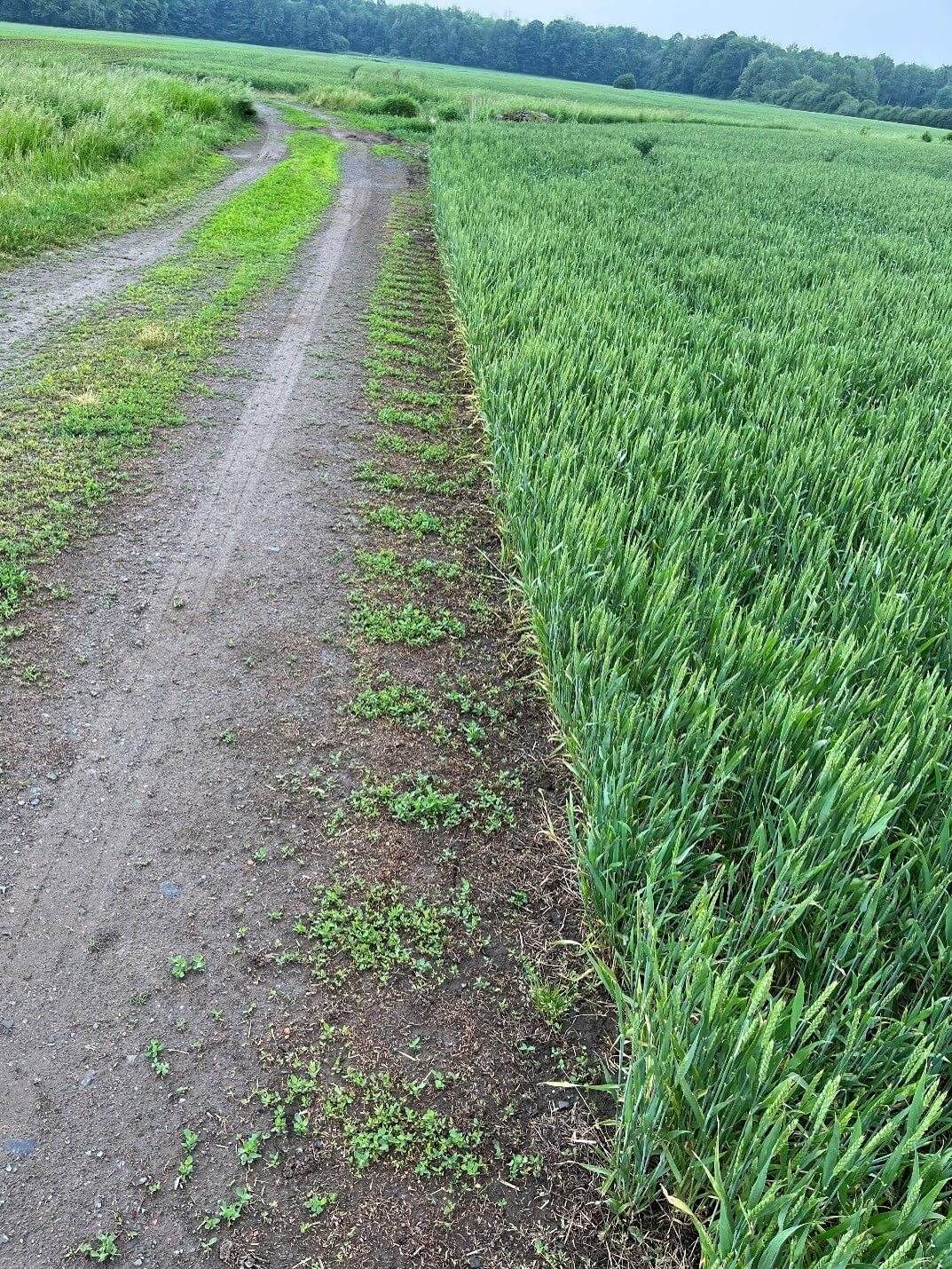
    This occurred in Ontario (date and location withheld). The sprayer missed the outer edge of the tomato field during a late blight application. An unintentional field check, and amazing to see the results.