Category: Speciality Sprayers

Main category for all sprayers that are not horizontal booms

  • The Micothon M2 – The Benefit of Air-assist Spraying in a Vegetable Greenhouse

    The Micothon M2 – The Benefit of Air-assist Spraying in a Vegetable Greenhouse

    I’ve experienced a few spectacular failures trying to build niche sprayers. Until now, I haven’t had a reason to write much about them. But I decided the contrast, and confession, would be a fun way to set the scene for a discussion about an excellent niche sprayer.

    Failed Attempts

    First, the ill-fated “Hops Sprayer”. We used an adjustable ladder to position 20 feet of arborist guns between hop rows. The nozzles could be raised and engaged to match the growing crop canopy. While it left decent coverage on the adaxial surfaces, we quickly realized it needed air-assist to get under the leaves and battle high winds at the top of the trellis. It’s since been cannibalized for parts, and the rusted remains haunt me whenever I drive by the outdoor storage area at our ag research station.

    The Hops Sprayer. A 3 point hitch, vertical boom that could adapt to match canopy height.

    Later, encouraged by a minor success ducting a backpack mist blower with PVC and Coroplast, I tried building an air-assisted spray cart for a floriculture operation. It featured commercial, high-volume radial fans paired with hollow cone nozzles positioned in front of the air outlets. With respect to GreenTech and Croplands Equipment in Australia, I tried to build a bargain-basement SARDI-style head.

    When it wasn’t threatening to tip over, it managed decent coverage over almost 2 meters. Almost.

    As it turns out there’s a very good reason engineers use computational fluid dynamics to design air-assisted sprayers. We were ultimately beaten by an uneven greenhouse floor crowded with obstacles, a stiff canopy of geraniums, and the inverse square law, which states: “The farther away an object is from an effect, the less change can be observed in the object”. This rig now has a new life circulating hot air in a boiler room.

    And I once built an air-assisted, tow-behind sprayer to spray troughs of tabletop, hoop house strawberries. That unit laid down an excellent, uniform spray on all foliar surfaces, but it was frustrating to use. There was almost no clearance in the hoop house, which changed height with the topography, and the alternator couldn’t keep the battery sufficiently charged to run the pump and fans. I felt we could overcome these small difficulties, but sadly the operator ended this experiment halfway through the season. I can only assume the sprayer is now an interesting piece of lawn sculpture.

    This sprayer had potential, but limited resources prevented it from getting beyond the beta stage.

    The Micothon M2

    Despite my inability to build a decent air-assisted sprayer, I have always maintained that air-assist is the secret sauce for efficient, uniform spray coverage. Lucky for me, Great Lakes Greenhouses (GLG) agreed. No stranger to innovation, the company recently purchased a first generation, air-assisted Micothon M2 greenhouse sprayer and invited me to come see it. This was a proper sprayer designed by engineers, and not a delusional plant physiologist, so I was excited to assess and calibrate it. This article will describe what we learned and perhaps in some small way, validate my failed attempts.

    A quick walk around before we got to spraying.

    The M2 features a vertical boom design supported by a portable tender unit, but that’s where the similarities to a classic “tree” sprayer end. Rather than riding on the hot water pipes, or tipping onto two wheels like a hand cart, this version rides on self-leveling wheels. It is drive-assisted but still has to be guided by an operator, like a self-propelled walk-behind lawn mower.

    Drive-assist, self-levelling wheels.

    The mast features 18, three-position nozzle turrets (nine to a side). GLG requested a bespoke spring-loaded break-away section at the top of the boom. This allowed the top nozzles to “duck” under an annoying section of greenhouse infrastructure that would have otherwise prevented it from being positioned between the rows.

    A spring-loaded, break-away boom section (with guard) to prevent impact damage.
    The break-away section in action.

    The air is generated by a centrifugal fan powered by a Honda motor. The air travels up the ducted mast to a manifold of narrow air outlets. When the sprayer is moving, the air outlets precede the nozzles, which initially seemed wrong as the spray would be released outside the air stream. But, upon closer inspection, we saw that the air outlets are not only angled up by 45 degrees but are also angled back so the air can transect the spray.

    Air outlets and nozzles – front view.
    Air outlets and nozzles – side view.

    It was suggested that the blade of air acts like an airfoil, creating an area of low pressure and sucking small droplets into the airstream. This is Bernoulli’s principle and it describes how wings create lift. Personally, I think it behaved more like a Venturi. I’m open to debate since, as evidenced by my attempts at building a sprayer, I’m no engineer. What matters is that we didn’t see any droplets hanging in the air as the sprayer passed. It works.

    Calibration and Optimization

    We followed the same greenhouse sprayer optimization protocol I’ve outlined in this article. Go give it a quick read and come back so I won’t have to reiterate why we took the steps we did.

    Travel speed and air settings

    The sprayer was set to speed “3” of a possible “5”, as recommended by Micothon. Travel speed dictates dwell time, which is the duration the air is focused on the target. Observers stood in the drive alley and in the two adjacent alleys to see how the air moved leaves. The upward angle of the outlets combined with the volume produced by the centrifugal fan wafted and twisted leaves on their petioles. This created sufficient movement throughout the canopy, but not so much that it caused the canopy to louver shut. It was a Goldilocks situation so there was no need to alter anything.

    Preparing to guide the Micothon M2 through the cucumbers under red LED lights. This image gives perspective of canopy height, density and the sprayer clearance.

    Pressure and nozzles

    The tender system regulator was set to 41.5 bar (600 psi) and that pressure dropped to 5.5 bar (80 psi) according to the gauge on the sprayer. While we didn’t test it, I’m certain the pressure at the furthest (aka highest) nozzle would have been closer to 5 bar (~70 psi). With observers in place, we started spraying water using the Albuz 025 (lilac) hollow cone tips.

    We saw the highest nozzle positions were spraying over the canopies and did not need to be on. We also saw drip points form at the tips of the leaves and the bottom of the cucumbers. There was evidence of yellowed (possibly damaged) tissue at the leaf tips, suggesting they were often sprayed to drip. This is wasteful and tends to redistribute deposits in undesirable ways. While it’s hard to avoid on the waxy, vertical cucumbers, it can be prevented on the leaves.

    Note the drip point formed at the bottom of the fruit. This is hard to avoid, but can at least be minimized.

    We turned off the top nozzles, swapped to Albuz 02 (yellow) hollow cones, moved to an unsprayed canopy and tried again. Effectively this was a 20% cut in water and product, but there were no more drips on leaves and less evidence of coalescing deposits. The cucumbers still had drip points, but without an adjuvant that was the best we could do. That’s assuming there would be value in spraying the fruit in the first place – these sprays were targeting the foliage.

    Coverage

    With the subjective part of the assessment complete, it was time to quantify spray coverage. Water sensitive papers were oriented co-planar with the leaves and essentially parallel to the ground. We clipped them 2-3 cm below the leaves by affixing them to the petioles. This way they would move with the leaf and represent a very challenging target (reminiscent of a sucking insect on the abaxial leaf surface).

    This is a difficult target to hit. The spray must get up between the leaf and upper side of the water sensitive paper, which is not in line-of-sight of the nozzle.

    We divided the canopy into quarters, placing one target in each section. This spanned the height of the canopy, but we also positioned them along the canopy depth: One on each of the four plants in the row. This left us with a diagonal cross-section. Read it again – you’ll get it.

    Then we sprayed the row from one side and inspected the results. We saw excellent coverage on the abaxial surfaces of the two plants closest to the sprayer. We expected that. But we were pleasantly surprised to see the spray got in under the umbrella-like leaves and deposited on the adaxial surfaces. This was not line-of-sight for the nozzles, and there wasn’t much room between the paper and the underside of the leaves, so this was clearly the result of air-assisted droplets.

    There was also respectable coverage on the two plants on the far side of the row. These targets were greatly improved once we travelled down that alley and saw the cumulative coverage. This is why you should (almost) never perform alternate row spraying.

    Abaxial side of the water sensitive papers. From left to right, papers ascended from the lower quarter of the nearest plant to the upper quarter of the farthest plant in the row.
    Adaxial side of the water sensitive papers. From left to right, papers ascended from the lower quarter of the nearest plant to the upper quarter of the farthest plant in the row.

    Compared to a tree

    Since I was in the neighbourhood, we decided to see what a conventional, hydraulic tree could do by way of comparison. Frankly, there was none.

    A typical greenhouse tree. Note the 1/4 turn drain near the pressure gauge, the lack of check valves, and the uneven distribution of the nozzle positions (i.e. more at the top) likely intended to direct more flow higher in the canopy.

    The tree was nozzled with Albuz 04 (red) hollow cones angled upwards. There were only a few check valves, so it leaked when it was turned off and had to be drained at the end of each row using a quarter turn valve. Coverage was generally excessive (i.e. coalesced droplets and lots of run-off) and non-uniform (we randomly missed both adaxial and abaxial surfaces).

    Run-off was so pronounced that it washed the dye off the water sensitive papers.

    We re-nozzled to my favourite load out: TeeJet TwinJet fans alternating back and forth by 45 degrees from centre. Using 03’s (blue), we observed improved uniformity, but still saw misses and suspected we were still using too much water. When leaves are drenched they get heavy, causing them to hang lower and obscure the other parts of the plant. This is the contradiction that limits a strictly hydraulic system: Pressure motivates droplet movement, so you need slightly larger drops and more volume. However, too much water causes run-off and weighs leaves down, obscuring the rest of the canopy. Catch 22.

    I proposed getting a set of 02 (yellow) tips in the hopes there would still be enough spray for better uniformity. I hope they tried it.

    A few beefs about the M2

    There’s always room for improvement. Before you think I’m selling these sprayers, here are a few observations from the owners and from what we saw that day. No deal breakers, just some nice-to-haves:

    • The diesel exhaust from both the sprayer and the tender cart is not ideal. Applicators wear respirators, and the greenhouse fans tend to dilute the exhaust, but a battery system (perhaps like a drone) would be preferable to power the drive electrically.
    • There was a latency with the self-leveling wheels and with air build-up in the tower portion of the sprayer. You simply need to be patient before you start down a row.
    • The tower section gets hot to the touch, likely because of the position of the exhaust pipe.
    • The alternator on board recharges the battery, but if you let it sit the battery is depleted (sounds like the same trouble I had with my sprayer, which is somehow gratifying).

    I’m sure you’re asking “How much?”

    Well, at the time of writing, it was almost $70,000.00 CDN, but don’t judge it too harshly! Bear in mind that our assessment saw a reduction of 20% water and crop protection product that would otherwise have ended up on the greenhouse floor. Not only is that a big savings in water and inputs, but it’s fewer refills and it produced far better spray coverage that a hydraulic system. While improved coverage is not always linked to improved efficacy, they certainly go hand in hand. And when we’re considering “softer”, biorational greenhouse chemistries, improved coverage is the best bet we have for pest control.

    All in all, this was an excellent sprayer that I hope is the first of many to grace Ontario’s greenhouses.

    Thanks to Great Lakes Greenhouses for the invitation, and thanks to all the other grower cooperators (names withheld to protect the innocent) that took a risk on building budget, niche sprayers with me. Sometimes, you just have to throw money at it.

  • Ecorobotix’s ARA Sprayer: A targeted sprayer that’s finding its place in Ontario vegetable fields

    Ecorobotix’s ARA Sprayer: A targeted sprayer that’s finding its place in Ontario vegetable fields

    Targeted spraying is a technology that enables the site-specific application of plant protection products and liquid fertilizers based on sensor readings. Some of the latest machines incorporate computer vision and processing capabilities that can distinguish between different types of weeds and crops based on multiple adjustable criteria.

    The Swiss-made ARA Sprayer by Ecorobotix, has recently generated significant interest among Ontario growers. This article provides a technical overview of the machine, including a detailed explanation of its main features and capabilities.

    The Sprayer

    The sprayer is a two-component system, mounted directly onto the front and back of a tractor. The front unit consists of two separate tanks: one dedicated to the chemical solution and the other to fresh water, which can be used for rinsing or refilling the chemical mixture tank. The front component also includes the pump and processing unit (Figure 1).

    Figure 1- Front-mounted unit.

    The boom section is mounted via three-point hitch to the rear of the tractor (Figure 2). The shrouded boom folds for transport and storage and features 156 individually controlled nozzles (Figure 3).

    Figure 2- Rear unit deployed.
    Figure 3- Closeup of the boom.

    The unit can be controlled and monitored from a tablet or smartphone connected through the machines’ own Wi-Fi. External data connection through internet is only required for occasional maintenance and updates but not for regular field operations. Regardless of the complexity embedded in the smart operating system, the interface is intuitive and easy to manage. Most of the parameters are automatically optimized by the software (Figure 4).

    Figure 4- Tablet interface.

    Capabilities

    Since the intelligent vision system acts as the central controller for each individual nozzle, it enables a wide range of operating modes and potential applications. Depending on user needs, the system can process information and respond in various ways. The following list outlines the currently available and tested features, which may be expanded in the future.

    Banded Spraying

    In this mode, parallel bands of variable width are sprayed, which might include or exclude the crop (Figure 5), depending on the objective. The lines are defined based on AI detecting a planting pattern, which will lead to the automatic definition of the spraying swaths.

    Figure 5- Banded application options: in-row or inter-row.

    Size-Exclusive Spraying

    This option allows targeting the spray based on the plant size. It can either be used to:

    • Detect and spray weeds larger than a small emerging crop.
    • Detect smaller emerging weeds in an advanced-stage crop. Weeds similar in size or larger than the crop will be missed in this case. (see figure 6 – left).
    • Spray only the crop with fertilizers or pesticides when no-specific algorithm has been developed to differentiate it from the weeds. The crop must be significantly larger or smaller than the weeds for this mode to work efficiently. (see figure 6 – right)
    Figure 6- Only plants smaller (left) or larger (right) than a specified target are sprayed.

    Green on Brown Spraying

    The machine will spray all detected green material (Figure 7). This is particularly useful for improving chemical use efficiency in stale seedbed and insecticide applications. It also offers an interesting option to reduce the risk of herbicide carryover in pre-plant, post-weed-emergence control, especially when weed cover is low and the product may persist in the soil long enough to affect the crop.

    Figure 7- Green on brown spray.

    Green on Green Spraying (Six Scenarios)

    The vision system and processing capabilities can identify the crop, distinguish it from weeds, and selectively target either, regardless of plant size. Additionally, a variable safety buffer can be defined to determine how close a spray can be applied to the nearest crop leaf. If this feature is inactive, any overlapping weeds will be sprayed, even if the herbicide contacts the crop. If active, the sprayer will avoid targeting weeds that are closer than the defined safety buffer distance, which can be set up to 16 cm (6.3”).

    The parameters can be configured to cover six difference scenarios:

    1. Selective herbicides when no safety buffer is required

    All weeds will be sprayed, regardless of their proximity to the crop. If they’re very close, the crop might receive part of the spray (Figure 8). This mode is suitable for selective herbicide applications.

    Figure 8- Herbicide application with zero safety buffer.

    2. Non-selective herbicides when the contact with crop canopy should be minimized

    In this case, depending on the potential damage caused by the chemical contacting the crop, a variable buffer can be programmed. Only weeds that can be sprayed while maintaining the defined buffer distance from the crop will be targeted (Figure 9). Inevitably, weeds in very close proximity or overlapping with the crop will be missed.

    Figure 9- Weed target spray with a safety buffer.

    3. Crop-targeted spray

    The machine will detect the crop and will not spray anything else (Figure 10). This can be useful for insecticide or foliar fertilizer applications.

    Figure 10- Crop-targeted spray.

    4. Application of weed pre-emergence herbicides post-crop-emergence

    In this case the entire surface, except the crop canopy is sprayed (Figure 11). It can be utilized to spray herbicides with soil residual activity post crop emergence.

    Figure 11- Pre-emergent herbicide application excluding the crop/

    5. Monocots vs dicots weeds differentiation

    This mode is limited only to onion fields for now. It can be configured to spray only monocots weeds (grasses, sedges) or only dicots weeds (broadleaf). This can be useful to increase the efficiency of post-emergence broadleaf or grass selective herbicide applications.

    6. Specific weeds targeted

    In this mode only the target weeds will be sprayed. As of now, it’s only available for thistles, docks, and common ragwort. It can be used when a specific herbicide is used to target hard-to-control species.

    Speed and Accuracy

    For all applications, the company claims to have a spray accuracy of 6 cm by 6 cm (2.4”x2.4”). The speed of operation will be dependent on the weed size. The larger the weed size, the lower the recommended speed to allow for an optimal spray coverage of the weeds, increasing the treatment efficacy. The speed operating range is 0 to 7.2 km/h (0-4.5 mph).

    Weed coverage or density does not affect the maximum recommended speed, as the machine can process images at such high rates that it is capable of scanning and spraying 100% of the area when moving at full speed. In other words, the processing unit does not need to slow down to detect, differentiate, and target weeds, even when they are present at very high densities.

    Ecorobotix claims the machine can cover 2.8-3.2 ha (7-8 acres) per hour under typical conditions and can run 24/7 independent of light conditions.

    Crop Portfolio

    As of August 2025, the company has developed the following algorithms for specific crop recognition:

    Vegetable Crops:

    • onion
    • carrot
    • lettuce
    • endive/chicory
    • beans
    • spinach
    • broccoli (beta)
    • cauliflower (beta)
    • leek (beta)
    • other cabbages (beta)
    • potatoes
    • sweet corn

    Field Crops:

    • sugar beet
    • rapeseed (canola)
    • corn
    • soy (beta)
    • cotton (beta)
    • wheat (beta).

    For the crops not listed, the equipment can still be used but not with the features that required crop identification for targeted sprays.

    Technical Specifications

    • Minimum weed size required for weed detection: 4 x 4 mm.
    • Maximum plant height: 40 cm.
    • Minimum crop size for proper identification: at least two true leaves.
    • Minimum tractor power: 90 HP
    • PTO: 540 RPM, 4 HP (3 kW) max
    • Three-point hitch: cat 2 front and back.
    • Weight:
      • Front unit: 705 lb or 320 kg (empty), 2,645 lb or 1,202 kg (full)
      • Rear unit: 2,257 lb or 1025 kg
    • Dimensions (Figure 12):
      • Front unit: 5’7” x 4’7” x 5’7” (W x D x H)
      • Rear unit: 21’4” x 8’10” x 4’3” (W x D x H)
    Figure 12- Dimensions.

    Cost of Purchase and Operation

    At the time of writing, the purchase cost for a complete unit is around $300,000 USD, depending on the algorithms purchased and shipping fees. In the following years, there is an annual fee associated with the operating system maintenance and development. The basic subscription includes algorithms for three crops, as well as access to all beta-stage models currently in development. Additional crop algorithms can be purchased. For accurate pricing, contact their Canadian partner, Univerco.

    According to the manufacturer, the equipment does not require regular replacement of expensive components beyond standard sprayer preventative maintenance. While some components are standard and readily available, the company also keeps a regular stock of specialized parts at its warehouse in Pasco, WA, available for immediate shipping. Comprehensive service and maintenance support is provided locally by Univerco.

    Testimonial

    Wendy Zhang is the head agronomist for Keejay farms. She oversees more than 5,000 acres of diverse vegetable crops, predominantly carrot and onions. In her own words, the machine is “easy to operate, very accurate, and fast enough for a large-scale farm.” She also highlighted substantial savings on chemicals and the significant advantage of being able to safely spray close to the crop using products that cannot be broadcasted due to the risk of unacceptable crop damage.

    The most important benefit, she says, is the ability to apply treatments very close to the crop canopy, using effective rates and chemistry without compromising crop safety. No other practical tool offers this capability. A clear demonstration of its effectiveness is that no other spray equipment is currently being used for their large onion operation.

    The Grower Magazine published an excellent article about this machine, featuring other grower testimonials.

    Thanks to Olivia Soares de Camargo, Business Development Manager at Ecorobotix, for providing much of the information used in this article.
  • Circulating Spray Mix Through a Tank-Rinse Nozzle Maintains Nematode Concentration

    Circulating Spray Mix Through a Tank-Rinse Nozzle Maintains Nematode Concentration

    This article was co-written with Jennifer Llewellyn, former OMAFA Nursery Crop Specialist

    With more and more bio-rational products on the market, crop protection methods may require reassessment. Certain products require exacting water quality, cannot tolerate residues, and have half-lives that are both time- and temperature-critical. We’ve been getting questions about sprayer compatibility with some of these new products, so it seemed like a good opportunity to recycle this article from 2013.

    Many horticultural commodities, such as turfgrass and nursery crops, include the application of live nematodes as part of their annual IPM program. We performed preliminary research into the claim that a grower’s nematode applications were becoming less effective. In the course of the investigation it was discovered that the nematode concentration (i.e. dose) sampled from the spray nozzle was diminishing over the course of the application.

    (A) Tank-rinse assembly mounted through tank lid with a flow-regulating valve. (B) Close up of tank-rinse nozzle.
    (A) Tank-rinse assembly mounted through tank lid with a flow-regulating valve. (B) Close up of tank-rinse nozzle.

    After eliminating potential sinks in the sprayer’s plumbing (e.g. filters, strainers, etc.) it was hypothesized that the nematodes were adhering to the interior of the poly tank. If this was the case, the concentration would drop as the level of spray mix dropped. To test the hypothesis, we installed a tank-rinse nozzle to sparge the inner walls of the tank throughout the application and to re-suspend any stranded nematodes.

    A high capacity roller pump (Pentair series 1700C) was installed to operate the tank-rinse nozzle (Pentair Proclean Tankwash) during spraying. It was installed through a bulkhead fitting in the tank fill lid. During testing it was discovered that the tank-rinse nozzle shunted too much flow and pressure to maintain flow to the spray gun. A valve was installed behind the tank-rinse nozzle to restrict flow to the point where it gently rinsed the inner walls of the tank, restoring flow and pressure to the spray gun.

    (A) Installing a high-capacity roller pump. (B) Tank-rinse nozzle, with valve, installed through tank lid. (C) Control manifold installed to plumb the return, the tank-rinse nozzle, spray gun and boom. (D) The entire installed system.
    (A) Installing a high-capacity roller pump. (B) Tank-rinse nozzle, with valve, installed through tank lid. (C) Control manifold installed to plumb the return, the tank-rinse nozzle, spray gun and boom. (D) The entire installed system.
    (A) Nematodes, as-shipped, in a sponge. (B) Suspending nematodes for tank mixing.  (C) Counting nematodes. (D) Undiluted, healthy nematodes in a stock solution via microscope ocular.
    (A) Nematodes, as-shipped, in a sponge. (B) Suspending nematodes for tank mixing.
    (C) Counting nematodes. (D) Undiluted, healthy nematodes in a stock solution via microscope ocular.

    The 200 L tank was inoculated with a stock solution containing 25 million nematodes (125 nematodes / ml). 20 L of the spray solution was sprayed into a bucket every 10 minutes, whereupon 1 L of spray solution was immediately removed and 1 ml volumes were sub-sampled for counting.

    In the first trial, nematode counts continued over a period of 2 hours and viability dropped by ~40%. It was assumed the damage was caused by prolonged circulation through the roller pump. In subsequent trials, the sampling duration reduced to 10 minutes (more realistically reflecting the time it took the grower to apply 200 L in the field). The tank was rinsed and re-inoculated for each trial. 1 ml samples were drawn from the spray gun, which operated continuously, with and without the tank rinse nozzle in operation.

    Univariate analysis confirmed data normality and a GLM procedure was conducted for analysis of variance. Results indicate that nematode concentration dropped by ~15% without tank-rinse with minimal nematode damage observed. With the tank-rinse nozzle engaged, the concentration still declined slightly, but significantly less (<5%) (see graph below).

    Nematode concentration over time for each condition.
    Nematode concentration over time for each condition.

    The results suggest that a tank-rinse system that sparges the tank walls preserves nematode concentration throughout an application and may lead to more efficacious applications.

    Horticultural Crops Ontario, Ground Covers Unlimited, Pentair (Hypro) and Nemapro are gratefully acknowledged for making this research possible.

  • Strainers (aka Filters)

    Strainers (aka Filters)

    The level of filtration required for any given spray operation depends on the materials sprayed and the nuisance factor: That is, the balance between lost productivity from plugged nozzles and the effort required to address them during rinsing.

    There are opportunities to install strainers at the tank opening (usually a basket), the suction-side of the pump, each section line, and behind the nozzles. While we’ve yet to see an operation that uses all four (speciality or field operations), the suction strainer and line strainers are required bare-minimum.

    This infographic explains how strainers are classified. Be aware that older strainers may use a different colour code (e.g. 50 mesh used to be red – now it’s blue).

    To convert these ratings to actual size exclusion, we look at the Mesh Width (mm). An 80 mesh (yellow) leaves a distance of 0.18 to 0.23 mm between the wires. We can convert Mesh Width from mm to microns by multiplying it by 1,000, giving us 180 – 230 microns.

    Each level of filtration should get progressively finer, ending with the nozzle strainers being slightly finer than the nozzle orifice. Nozzle catalogues will often advise you on which strainer is appropriate for the nozzle you are using.

    When we ask why operators don’t use nozzle strainers, the response is either “Because they plug” or “It’s one more thing to clean”. Well, if your nozzle strainers are plugging, it’s likely because you have an agitation (see here) or mixing issue (see here and here) further up the line. They can handle a lot before the spray pattern begins to suffer … but yes, you do have to clean them regularly so they can continue their good work.

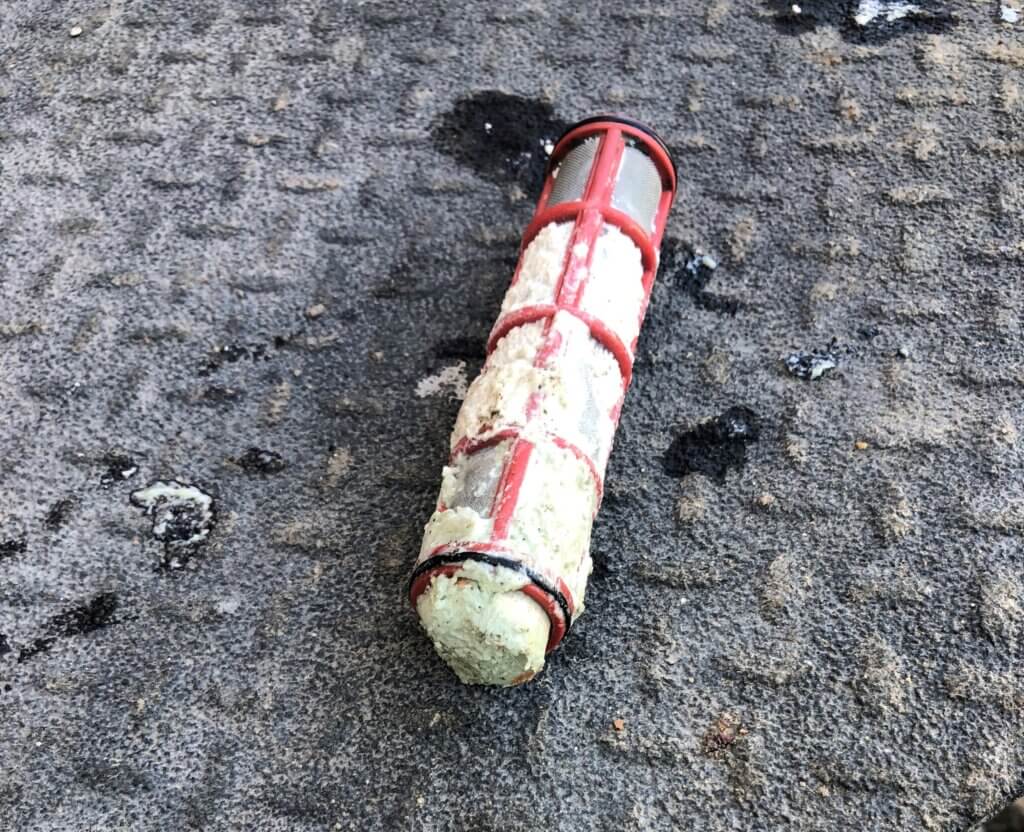
    Running water through any strainer often fails to remove plugs and debris, which are a source of contamination that can wreak havoc later on. They have to be removed and physically scrubbed during rinsing. We ran a demo to show why this irritating process is still a must-do (here).

    If you use an airblast sprayer, you should use slotted (not mesh, which plug too easily) nozzle strainers. Beyond the obvious benefit of preventing plugged nozzles, the strainer shoulder plays a role in keeping the nozzle snug in the nozzle body. Without it, you may need additional gaskets to prevent leaks. Be aware that some nozzle strainer designs can plug a nozzle body. Learn more here.

    If you use a field sprayer with clean carrier water, liquid formulations and large nozzles, you may never need nozzle strainers. But, if you’re using a lot of dry formulations, if your agitation is under-powered, or if your fill water is less than pristine (we’ve seen frogs in sprayer tanks) then you might consider them… even if they are a nuisance to clean.

  • Why are my Airblast Nozzles Plugging?

    Why are my Airblast Nozzles Plugging?

    This article was inspired by the following email:

    “I’m an organic apple grower with constant nozzle-clogging problems. These problems occur when we use wettable powders such as micronized sulfur and Surround WP. We always premix before adding to the tank through its strainer. Our airblast sprayers have towers and employ mechanical agitation. The nozzle/filter combo is TeeJet TXR8001K Ceramic Conejet Visiflow Hollow Cone spray tips with TeeJet 4514NY10 50-mesh nylon slotted strainers. The nozzle strainers rarely make it through a full tank without having problems. Do I need to add an additional level of filtration or is there something that I’m missing?”

    A clogged slotted strainer inside the nozzle body. Note that the inners of the check valve seem clear (a good thing).
    A clogged slotted strainer.

    You can almost feel the frustration. When I receive grower enquiries, I first turn to the library of articles on Sprayers101 as well as the Airblast101 textbook. I was surprised to discover that we didn’t have anything that addressed this issue directly. So, I checked through university extension and industrial resources. Ultimately I couldn’t find what I was looking for, so let’s correct this oversight.

    Possible causes

    There may not be a single reason for why nozzles plug. It might be a combination of the following factors:

    1. Product choice

    While any tank mix can create clogs if they prove to be physically incompatible, there are two formulations that have a reputation for clogging nozzles.

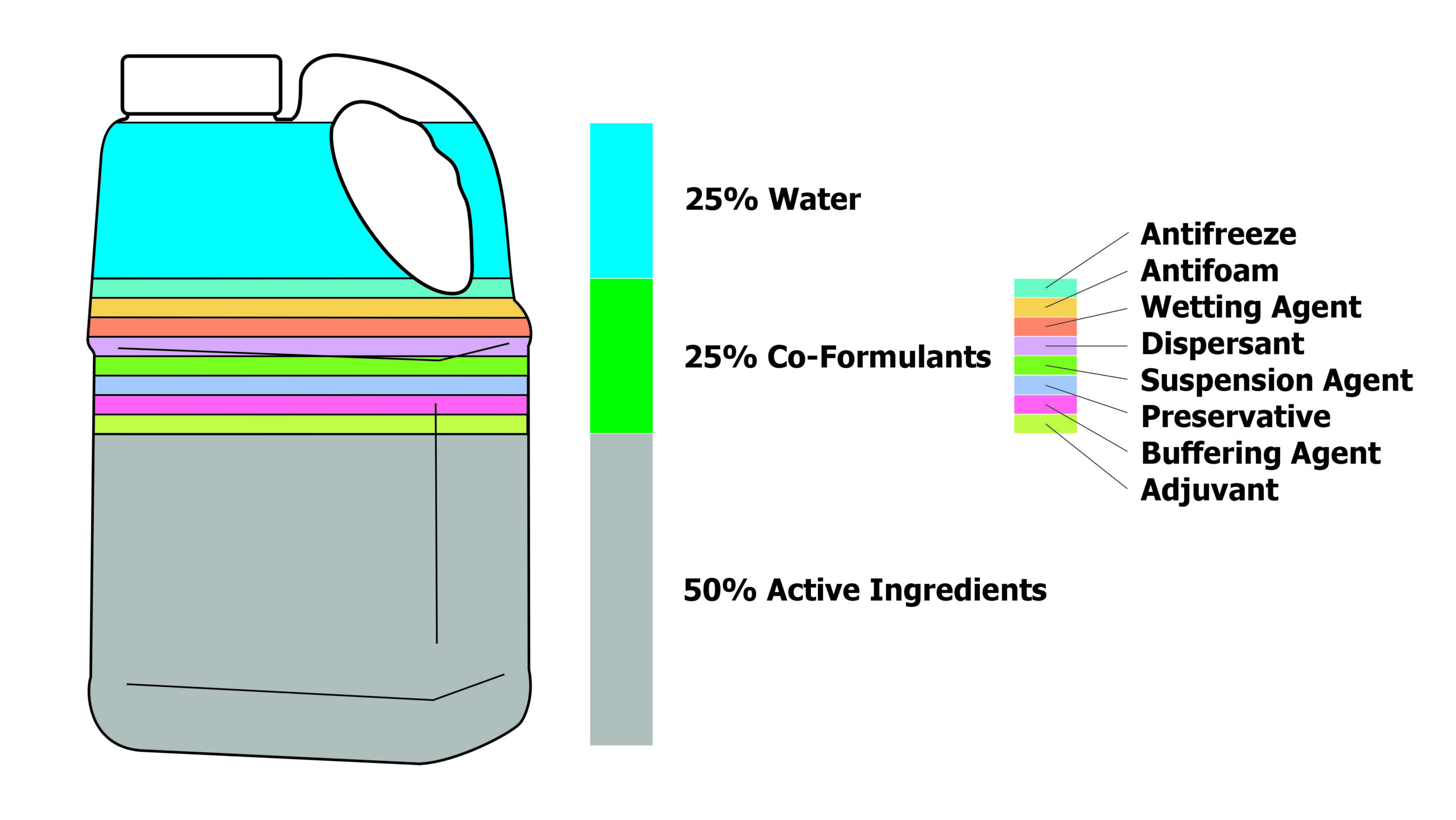
    • Wettable powder (WP) formulations such as micronized sulfur and diatomaceous earth are notorious for clogging nozzles. WPs consist of a finely ground solid active ingredient often combined with wetting and bulking agents to help hold them in a dilute suspension. They tend to be dry products rather than liquids.
    • In a similar vein, suspension concentrate (SC) formulations also consist of a finely ground solid active ingredient, but this time they are suspended in a liquid and kept dispersed in the sprayer tank by wetting agents, dispersants, and thickeners. These formulations are known as “flowables” or “suspensions”.

    By the way, for those thinking he should change products, he already uses Kumulus DF (or Microthiol Disperss), which are reputedly the least troublesome formulations… and smell better than other sulfurs.

    2. Mixing practices

    Pre-slurries are sometimes prescribed for SCs. I personally feel that pre-slurries create exposure risks and more things to clean, but this opinion is moot in the case of WPs: Micronized sulfur and diatomaceous earth are not soluble. They’re particles that are held in suspension by fluid flow or agitation, so there’s no point in a pre-slurry.

    For those readers that cook, consider the corn starch metaphor. You’re making a sauce, and you choose to thicken it with a pre-slurry of corn starch and water. The particles disperse, but do not dissolve, so if you fail to use it immediately they settle to the bottom of the container. They must be forcibly scraped up and resuspended.

    3. Agitation

    Best practice is to fill the tank at least ½ full of water and engage agitation before you add anything. To extend the cooking metaphor, you want a simmer but not a rolling boil. Once filled, never stop agitating or WPs and SCs will settle and may not resuspend uniformly, if at all.

    Your sprayer design may affect matters. Some hydraulic agitation systems flag if they have undersized pumps. If your pump is busy sending flow to the nozzles, it may not have sufficient capacity to run the agitation. When your sprayer is “empty”, is there a thick accumulation at the bottom? You may have insufficient hydraulic agitation. Mechanical (paddle) agitation does not suffer this issue because it is direct-driven off the PTO. Read more here.

    4. Clean-out practices

    Perhaps plugs are occurring because of the previous tank, not the current tank. WPs can leave a buildup of settled pesticide in the tank, suction strainer and nozzle strainers. If you aren’t diligent about rinsing at the end of each day, products will settle and harden. Micro sulfur particles, for example, are less than 10 µm in diameter and harden into a flakey shell that can break loose and cause plugs.

    5. Flow restriction

    Several things can restrict flow. Elbows, bends and fittings can increase friction, reducing flow. The greater the distance a fluid needs to travel, the more flow is reduced. The greater the head (a pump’s head is the maximum height that the pump can achieve pumping against gravity), the more flow is reduced. There is an excellent description of this relationship here.

    So, if an operator is using nozzles with a particularly small orifice, plus nozzle strainers, on a vertical boom, liquid flow will be reduced. This allows particles to fall out of suspension and settle, forming further restriction to flow and eventually, plugs.

    Possible solutions

    Now, armed with these potential causes, let’s return to the grower. After some back-and-forth, he clarified that the clogs were a problem, but restricted flow was worse. An operator will stop to clean or replace a plugged nozzle, but may not notice reduced flow. This has the potential to affect several rows as well as leave unsprayed product in the tank.

    My first proposal was to increase nozzle size. An ’01 tip is very, very small and even with slotted strainers (as opposed to mesh), that’s a lot of restriction. I suggested recalibrating for larger tip orifices. This is a rather involved process, but options included using every second nozzle (as long as there were no gaps in coverage), and/or dropping pressure, and/or increasing travel speed (as long as the spray still reached the tree top and canopy centre). I shared this Excel output calculator to help with the process.

    Failing that, we discussed a plumbing project. Section 5.2.1 of Airblast101 describes a way to create a self-cleaning line filter that replaces nozzle strainers. That means instead of climbing a ladder to pull tips off a tower to reach the strainers, all filtration is conveniently located at ground level for easier (and more frequent) cleaning.

    The outcome

    The grower felt the numbers worked best running orange 02 TXR’s in every second position. He ordered new 50 mesh slotted nozzle strainers. His new operating parameters would be 5 nozzles/side, at 8.2 bar (120 psi) and 5.1 km/h (3.2 mph) for a total 51.5 L/ha (55 gpa). He noted some incompatibility issues running Braglia nozzle bodies (spec on his Rears sprayer), TeeJet TXR’s, TeeJet slotted strainers and TeeJet CP20230 caps. That was an important observation, and you can learn more about it here.

    We felt good about this, but while there was an improvement, it didn’t solve the problem. There was still strainer clogging after the first tankload. So, he added inline filters and removed the tip strainers. The result:

    “Yesterday I sprayed over 350 pounds (over 1,000 gal) of Surround WP and had no issues. I’m really excited about this new setup – it looks very promising. I’ve attached more pics if you’re interested (I don’t spend a lot of time scrubbing sprayers until after Surround season). Thanks again for all your help in this matter. – Joe Fahey, Peck & Bushel Fruit Company”

    A 50 mesh inline filter assembly with a 1/4 turn ball valve for quick flushes.
    New filter plumbed and secured. Note the anti-rub wrap on the line – always a good idea.
    The new loadout. 02’s in every second position, with no tip strainers, and a new inline filter on each side of the sprayer.

    Fantastic. Thanks to Joe for letting me share this story. Hopefully his experience will help you diagnose and solve any flow or nozzle plugging issues in your own operation.

    Happy Spraying.

    Epilogue

    This article elicited some interesting comments. I’ll share two:

    1. One grower proposed switching from a low profile axial sprayer to an air-shear system (there are a few examples here). In this case, the grower had a European make with hydraulic agitation. The grower re-plumbed theirs by installing a bigger pump and swapping the sparge system with a 3/4″ pipe oriented toward the bottom to sweep it out. When mixing, the agitation valve is left wide open. He says he doesn’t even bother with a tank basket; he dumps the Surround (as much as 2 x 50 pound bags in 1,000 litres) and has no plugging issues.
    2. Another grower with considerable boom-sprayer experience was genuinely surprised this was even an issue. Self-cleaning filters have been commercially available for more than 30 years and most boom sprayers have them. This is a comment on the stagnation of the North American low-profile radial airblast design. Perhaps the long life of these sprayers (sometimes 40 years of service) makes iterative change slow, or perhaps most operators aren’t aware of new features, or perhaps change is a risky proposition in such high-value crops. This is a shame given that the first optic sensors were installed on airblast, not broad acre field sprayers. That comes as a surprise to many. But it seems to have been the exception and not the rule.