What is Delta T and why is it important for spraying?

Humidity is important in spraying. With the average tank of pesticide being 90 to 99.5% water, evaporation plays an important role in both droplet size and active ingredient concentration. Low humidity causes droplets to evaporate faster, potentially increasing drift and reducing uptake. But relative humidity (RH) isn’t the best way to measure this effect because […]

Read More… from What is Delta T and why is it important for spraying?

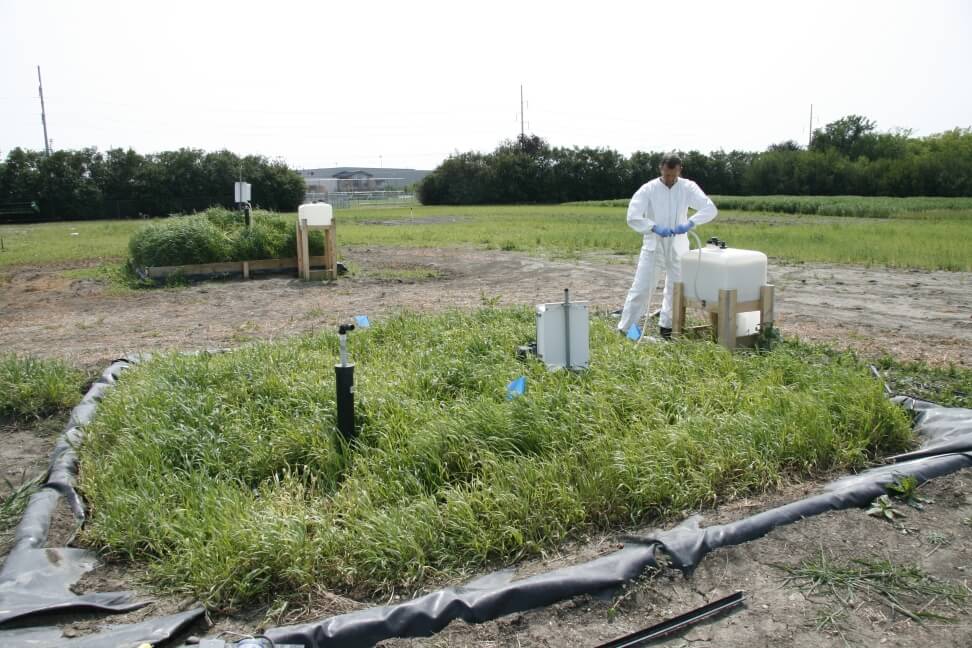
Biobeds for Pesticide Waste Disposal

One of the most challenging aspects of a spray operation is the disposal of leftovers or rinsate containing pesticides. Let’s be honest, too much of it is drained onto the ground in a corner of the yard or the field. Nobody’s happy about that, nobody’s proud of it, but what are the alternatives? Waste disposal […]

Read More… from Biobeds for Pesticide Waste Disposal

“Bee” Responsible with Pesticide Sprays

Horticultural crops cannot be produced commercially without the use of pesticides to manage the impacts of insects and pathogens. Growers recognize the importance of pollinators and in some cases, rely on bees for pollination. Growers are practicing due-diligence to try to minimize the effects of necessary pest management activities on bees. There’s a fine balance […]

Read More… from “Bee” Responsible with Pesticide Sprays

Spraying Large Nut Trees – Part 2

This article continues from Part 1. Droplet size Droplet size influences droplet behaviour. The following table lists the pros and cons to changing droplet size when overall spray volume (e.g. L/ha) remains constant. Relative Spray Quality Pros Cons Coarser Droplets Lower drift potential because they resist deflection by wind and evaporation from heat and low […]

Read More… from Spraying Large Nut Trees – Part 2

Spraying Large Nut Trees – Part 1

Introduction I’ve studied spray applications in a diversity of crops, both broad acre and specialty, but perhaps nothing is as challenging large tree nut canopies. Australia’s macadamia orchards can form >10 metre high, >4 metre deep canopy walls! So in writing this article I face the opposite situation I normally encounter when advising on airblast […]

Read More… from Spraying Large Nut Trees – Part 1