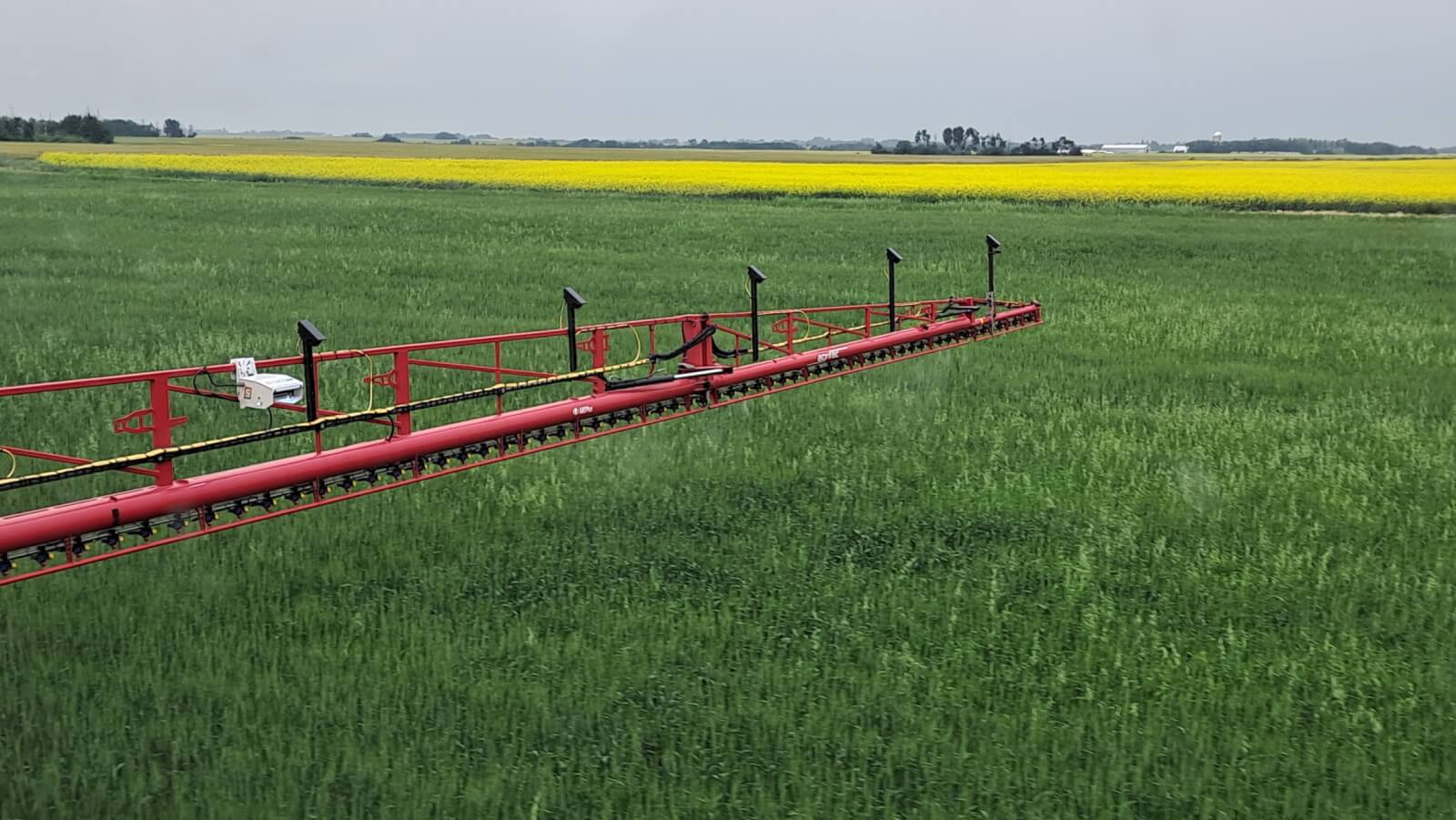
A version of this article was originally written by @nozzle_guy as a guest blog for Farm At Hand, and is reproduced with permission.
One of the smartest decisions a grower could make is to consider a late-season harvest-aid application. Particularly in years with thinner stands, weeds can maintain a foothold. Late season moisture can give new life to late emerging plants or branches. When the crop is ready to cut, this could mean all sorts of cutterbar, pickup reel, feederchain, and sieve headaches.
A desiccant or pre-harvest herbicide application can help avoid those problems. The challenge is to get the spray into, or through, a mature crop canopy. Here are some pointers to do it right.
Evaluate where within the canopy the spray needs to go to do its job. If you’re considering a pre-harvest herbicide, are you looking to control dandelions or buckwheat near the bottom of the canopy, or are you trying to get thistles or quackgrass, whose leaves are near the top? If you’re mostly trying to accelerate drydown with a contact product, where in the canopy are the green stems and leaves that you need to contact?
Take a bird’s eye view of your canopy. That’s how the spray sees it. If you can clearly see your target, the spray application is pretty straightforward because most droplets will make their way there easily. But if the target is obscured by a lot of foliage, or if it’s vertical, the job is much more challenging and will require some combination of more water, slower speeds, angled tips or finer sprays.
To hit plant parts that you can’t see, one of the main tools is finer sprays. The smaller droplets have an easier time changing direction to get around obstacles like leaves, and they are also much more likely to be intercepted by petioles and stems, and to stick to them. This can be both an advantage and disadvantage – for example, the awns in bearded cereals are notoriously effective at capturing the smallest droplets before they can do any good further down. If you don’t want to install a different nozzle to get a finer spray, simply increase the spray pressure of your low-drift nozzle to 80, 90, even 100 psi. This will create enough fine droplets. But don’t expect the higher pressure to push the spray into the canopy. Only air-assist can do that.
To get more spray deeper into the canopy, slow down, add water, and point nozzles backward. The backward orientation helps offset the forward travel speed, giving the droplets a slower net forward velocity that helps their downward movement.
If you’re using contact products like diquat, paraquat, saflufenacil or carfentrazone, use generous amounts of water, and slightly finer sprays. Make sure that spray drift control remains a priority and pay attention to water quality.
Test your water and make sure your water doesn’t have turbidity (suspended clay or other organic matter), for glyphosate and diquat or paraquat, and hardness, for glyphosate. Aluminum sulphate can help get rid of turbidity in a pond, but it takes time (treat turbid water at least 24 to 48 h before you need it). If treating a storage vessel, expect a layer of sediment. Ammonium sulphate (AMS) and other water conditioners can remove antagonizing hard water ions like magnesium and calcium. This is especially important as we increase water volumes with glyphosate to get better coverage. The higher water volumes give a concentration advantage to the hardness minerals.
Diquat and paraquat’s mode of action benefits from being applied in the evening. The absence of the sun allows it to be taken up and slightly moved (by diffusion, not true translocation) within the leaf before morning sunlight activates it. Once activated by the sun, these products exert their activity and movement stops. If you’re not careful, the tighter window of evening-only applications could get you behind. And of course, be aware of the signs of inversions and know when to quit.
Plan ahead and make sure you give yourself enough time, because to do the job right you’ll be using more water and driving a bit slower. Focus on productivity tools like a fast, efficient fill to make up the lost time.
A good job with a pre-harvest herbicide or a harvest-aid can save many harvesting headaches, and can help dry down during less than ideal conditions. It’s another reason why the sprayer may be the most important implement on the farm.
It’s time to spray and what’s the first thing you do? Check the weather forecast, of course. More often than not, the suitability of the weather is the main factor in the decision to spray. Let’s have a closer look at what each weather component contributes to the decision.
Wind:
Everyone knows that small droplets can drift if it’s windy, and the windier, the worse it is. But that’s hardly the whole story. Here’s how can we improve our understanding of wind and its impact.
Look beyond the wind forecast. It’s standard practice to look a day or two ahead for wind forecasts. At any instant, the wind speed and direction may be acceptable for our planned spray job, but we know that it will change. Consider wind speed sites such as Windfinder, Ventusky, or Windy for added insight. These services show trends over time in a great visual interface, allowing users to anticipate changes in wind speed and direction for better planning. While they aren’t forecasts per se, visualizing wind patterns over a larger region allows a better understanding of what’s coming your way.
Figure 1: Sites such as Windy.com offer powerful visualizations of current and future wind conditions.
Use wind as an ally. We’re conditioned to think of wind as having a negative effect on spray drift. The less the better. Yes, droplet displacement increases with wind speed. But the “negative-only” perspective is being re-evaluated in light of dangers associated with wind-free conditions that often occur during temperature inversions (see “Temperature”, below). In fact, wind provides several advantages over calm conditions:
Directional certainty. We can assess the risk to downwind sensitive areas. This is not possible with calm conditions because inversion air flow may follow terrain, and as inversions dissipate, the first daily winds can be changeable and unpredictable in direction.
Turbulence. Wind creates mechanical turbulence which helps sprays deposit and disperse. Both of these effects have value. In a calm environment, such turbulent eddies don’t exist.
Low drift options. If it’s windy, we have options to respond. We can lower the boom or lower the spray pressure. We can mix the next tank in higher water volume, forcing either a larger nozzle (larger flow rates of the same model nozzle usually produce coarser sprays) or slower travel speeds. All these practices reduce drift when it’s windy. In comparison, nothing (except not spraying) can be done to reduce risk during inversion conditions. This is because even low-drift spray contain enough fine droplets to cause damage if they linger.
Know your wind speed. The international standard for wind speed measurement is 10 m above ground level. When 25 km/h wind speeds are reported, they are at 10 m, not the 1 m height where the boom is located. Within the surface boundary layer, the part of the atmosphere closest to the ground, wind speeds typically increase linearly with the natural log of the height above the canopy. The slope of that line depends on atmospheric stability and roughness length. Very close to the ground, the wind speed reaches zero, and that height is a function of the roughness of the surrounding terrain.
As a rule of thumb, over a short crop canopy, expect the wind speed at 1 m above ground to be about 0.67x of the speed at 10 m. So if the weather reports 25 km/h, the actual wind speed at boom height is closer to 17 km/h. Remember that weather stations can be far away, and local conditions will vary. Always measure your local wind speed and direction with your own weather station or handheld device, and keep a record.
Figure 2: Relationship of wind speed and height, for three roughness conditions (Source: Oke et al, 2017)Figure 3: Hand-held wind meters or weather stations are an essential part of a spray operation and record keeping.
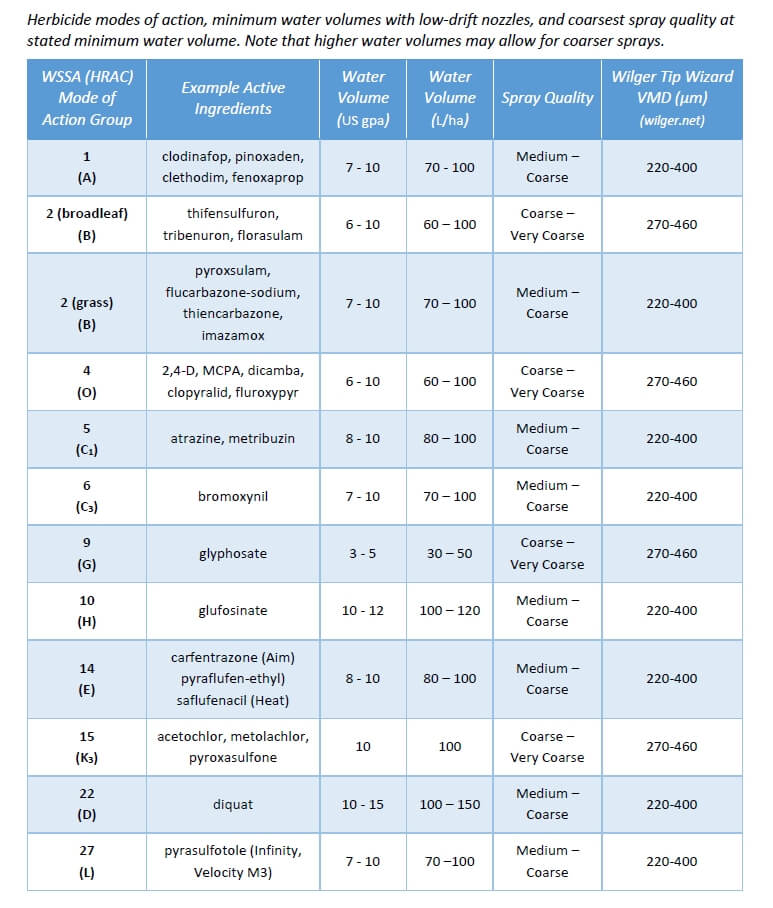
Wind and Mode of Action. Coarser sprays are a common way to reduce drift in windy conditions. But some modes of action aren’t well suited to coarser sprays. We can schedule our spray jobs throughout the day to correspond to spray quality tolerance. Apply the products that require the finest sprays (contact products, grassy herbicides, insecticides) when conditions are best, and save the sprays that tolerate the coarser sprays (systemic products, broadleaf targets) for less certain conditions later in the day. Or treat the fields whose downwind edges border a sensitive crop during better conditions. Here’s a rough guide to spray quality and herbicide mode of action.
Temperature
Like wind, air temperature is more complex than it appears at first sight. Here are some other aspects to consider:
Understand temperature inversions. Temperature matters. But perhaps the most important aspect of temperature when it comes to spraying isn’t the temperature per se, but how it changes with height. The temperature change with height is used to identify dangerous temperature inversions.
Here’s how temperature profiles work (for a quick Sprayers101 overview, here, for the best in-depth explanation (NDSU), here): Due to atmospheric pressure, there is always a slight temperature decrease with height, about 1 ºC per 100 m (the dry adiabatic lapse rate). This temperature profile describes a “neutral” atmosphere, i.e., no thermal effects.
When it’s sunny, solar radiation heats the earth, which in turn warms the air near it. As a result, the rate of cooling with height is greater than the adiabatic lapse rate, and we have “unstable” conditions that are characterized by thermal turbulence (warm air rising, cold air falling) that actively mixes air parcels. Thermal turbulence is very good at dispersing anything in the air, including spray droplets.
When solar radiation is low or absent, the earth cools and this mostly affects the air near it. As a result, air temperature rises with height, and the daytime temperature / height profile is inverted. Air parcels no longer move up or down, in fact they return to their original location if displaced. This results in a “stable” atmosphere, also called an inversion.
Inversions are dangerous because they are associated with very low dispersion, and a spray cloud will remain concentrated and may linger over the ground for a long time, like ground fog.
Most weather services do not actively measure inversions. Instead, their presence has to be inferred by clues. For example, inversions: (a) occur primarily when solar radiation is low, from early evening, overnight, to early morning; (b) are more likely on clear nights, when soils cool more; (c) can be seen when ground fog is present, or when dust hangs, moving slowly; (d) are associated with low ground temperatures that also cause dew.
Recent findings about inversion in Missouri were summed up in this excellent webinar by Dr. Mandy Bish, Extension Weed Specialist at the University of Missouri. Her studies showed that inversions can begin hours before sunset, their presence and duration are dependent on local conditions such as topography and windbreaks, and recognition of telltale signs of inversions such as lack of windspeed are important for accurate local assessments.
Figure 4: Morning ground fog in Australia (picture provided to author).
Use Mesonets if you have them. Mesonets are networks of weather stations, and they can add valuable information. For example, North Dakota has an extensive network of about 130 weather stations that, among other things, measures and reports temperature inversions. NDAWN (ndawn.ndsu.nodak.edu) reports temperatures at 3 m and 1 m, and issues warnings of temperature inversions as they develop at a specific location. NDAWN information is available as an app. North Dakota isn’t the only place to have a public mesonet, check to see what’s available in your area. The added information is worth subscribing to.
Know the volatility of the product. Some pesticide active ingredients are volatile. This means they can evaporate from a wet or dry deposit during and after application (more here). Dicamba is a prominent example, but there are others, like trifluralin and ethalfluralin, 2,4-D and MCPA ester, and clomazone. Formulation can affect volatility, and the use of lower volatile esters of 2,4-D and better salts of dicamba have helped. Microencapsulation has been used to reduce the problem with clomazone. Volatility is strongly affected by surface temperature, and volatile products should not be sprayed on hot days or when the forecast calls for hot days following application. Volatile products have been found to evaporate from dry deposits for several days after application, and their vapours move under inversion conditions, causing widespread damage.
Sun
The sun plays a large role in spraying. Plants’ active growth improves herbicide translocation as well as activity in the photosystem, or in amino acid or fatty acid synthesis. The activity of herbicides has been shown to improve under sunny conditions for that reason.
Some herbicides, most notably diquat (Reglone), work too quickly when it’s sunny, and improved performance can be gained by spraying under cloudy or low-light conditions. The lack of photosynthesis allows for some passive translocation before the product causes tissue necrosis.
Sunny conditions also increase thermal turbulence we mentioned earlier, which is useful for burning off morning inversions. But what usually follows a sunny day is a strong inversion as the sun sets and the clear sky facilitates the earth’s rapid cooling. It would be possible to spray a bit later into the evening when it’s cloudy.
Humidity
Since about 99% of the spray volume is comprised of water, evaporation of this water can have strong effects on droplet behaviour. Droplets begin to evaporate as soon as they leave the nozzle, becoming smaller and more drift-prone while still in flight. Higher booms and finer sprays increase the flight-time of droplets, and this increases the sensitivity to evaporation.
The most common measure of water in air is relative humidity (RH). RH doesn’t tell the whole story, though, because the same RH at different temperatures results in two different rates of water evaporation. A better measure is wet bulb depression. Wet bulb depression is defines as the difference in temperature reported by a dry bulb vs. a wet bulb thermometer. Wet bulb depression has more recently been coined as “Delta T” in Australia. The Delta T value is directly related to water evaporation, and charts have been published showing acceptable values for spraying. A Delta T of >10 ºC is considered too high.
Figure 5: Delta T, also known as wet bulb depression, provides an indication of water evaporation rate.
After they deposit on a leaf, droplets can evaporate to dryness within seconds, and a dry atmosphere can result in rapid drying that reduces herbicide uptake. In one study, a Group 2 herbicide was applied to weeds in a normal sized spray, and also as a fine mist, both under very dry conditions. The normal spray showed the expected herbicide efficacy. The finely misted herbicide had no effect on the weeds, likely because the rapid drying prevented uptake. Interestingly, the product began to work again when the plants were later placed in a humid environment.
High humidity can also work against an application. Since humidity is often high during temperature inversions, droplets remain potent while they linger and drift over sensitive terrain. It would be better if they had evaporated and lost their effectiveness.
Some proponents of low water volumes and fine sprays have suggested oily formulations or adjuvants prevent evaporation. While this may slow evaporation, it also creates a dangerous condition in which many small droplets remain aloft and liquid for a long time, with high activity on any target they may encounter. The bottom line: Don’t spray low volumes with oily adjuvants.
The Perfect Day
We know that the ideal spray day is sunny, starts a few hours after sunrise once the dew has mostly burned off, and has consistent winds away from sensitive areas. Spraying should end well before before sunset, before calm conditions signal the onset of the inversion.
But what to do when that day never happens? All too often, high winds persist day after day, and night spraying is the only alternative. In that case, do what you can to minimize potential damage. Survey downwind areas. Choose cloudy skies that suppress inversions. Incoming weather systems are usually associated with consistent winds, and these may reduce inversion risk. If drift is a possibility, apply more water and use the coarser nozzles at your disposal to minimize it. Any investments made to boost productivity will pay dividends, allowing you to get a greater proportion of your work done when conditions are better.
PWM is gaining popularity, and there is an ever-increasing number of first-time users that need to make nozzle selections for their system. We’ve written about it here, here, and here.
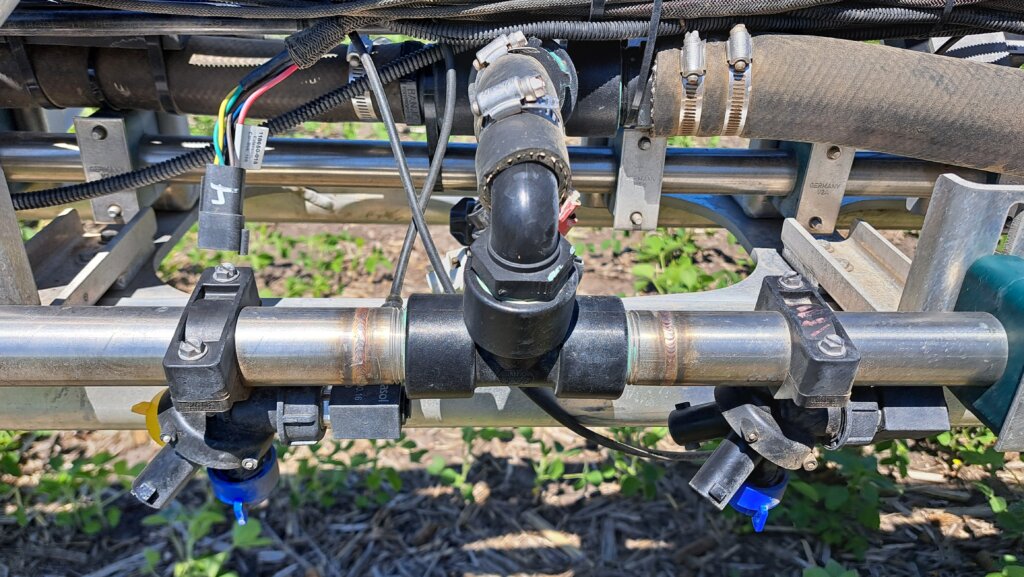
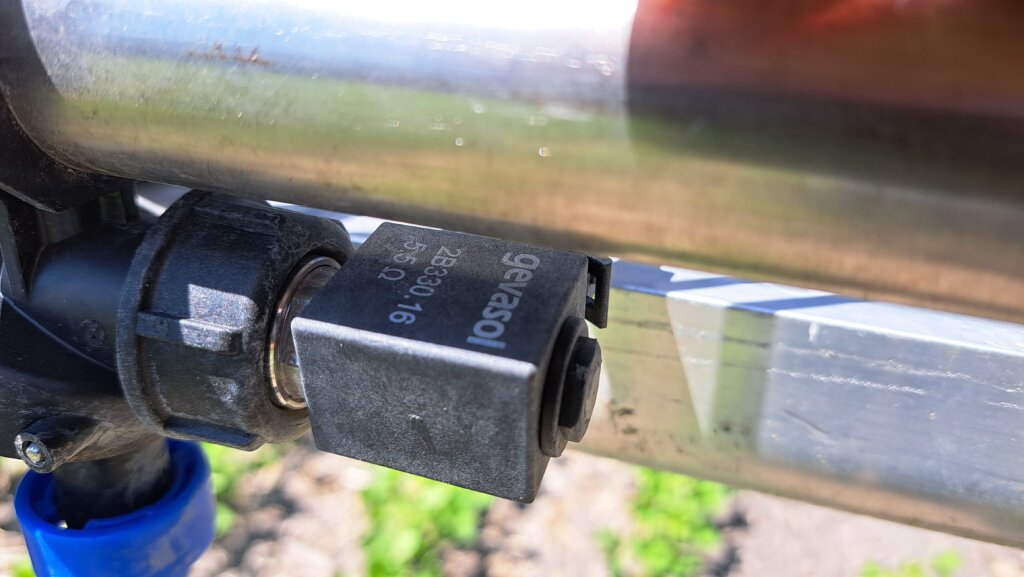
Recall the PWM replaces spray pressure with Duty Cycle (DC) of a pulsing solenoid as the primary means of controlling nozzle flow. The solenoid shuts off the flow to the nozzle intermittently, between 10 and 100 times per second depending on the system. The Duty Cycle is defined as the proportion of time that the solenoid is open, and for low-frequency systems, DC is more or less linearly related to flow rate.
The first rule of PWM nozzle selection is to understand that under average travel speeds, we’d like to see the duty cycle of the system at between 60 and 80%. This means that the nozzle solenoid is open about 2/3 of the time. This value also describes the flow rate as a proportion of the full capacity that nozzle.
The reason for this 2/3 duty cycle rule is to enable four key features of PWM:
It’s ideal for turn compensation, allowing the outer nozzles to increase their flow 20 to 40%, and the inner nozzles to decrease flow about three-fold, in accordance with boom speed.
It allows speed flexibility, providing some additional speed, but more importantly, reduced speeds should conditions require it, without a change in spray pressure.
It compensates for pressure changes so that spray quality can be adjusted without requiring a speed change. Less pressure reduces nozzle flow, and increasing DC recoups accordingly.
It allows for customized higher flows of certain nozzles, perhaps behind wheels, to address reduced deposition in their aerodynamic wake (available on some PWM systems).
The best tool for selecting the right nozzle size is Wilger’s Tip Wizard. This site asks for your desired average speed ( although it calls this “Max Sprayer Speed”), and reports the expected DC for a host of nozzle size solutions and pressures. It also reports maximum and minimum travel speeds and other useful information such as spray quality.
Fig 1: The Tip Wizard is a useful tool for sizing nozzles on any PWM system. Sizing information applies to any nozzle. Spray quality information is for Wilger ComboJet nozzles only.
Although intended for Wilger nozzles, the site’s sizing feature works for any nozzle brand. It asks the user which PWM system they have for the purpose of calculating the documented pressure drop across the solenoid.
Fig 2: Tip Wizard results for the Wilger SR11006 tip at 10 gpa and 15 mph. Look for a solution that provides 60 to 80% Duty Cycle (DC).
If you don’t have access to the site, a basic calibration chart can still work with a simple trick. Recall that we use the top row to identify the desired water volume, and the table’s interior values are speeds, as described here.
Below are two solutions for someone wanting to apply 10 gpa at 15 mph without PWM. The correct choice depends on the required pressure to produce the needed spray quality.
Fig 3: A conventional calibration chart, solving a 10 gpa application for 15 mph.
If you want to apply the same 10 US gpa using PWM, simply solve for a larger volume that offers the right DC. For example, choosing 13 gpa will over-apply by 3 gpa, or 30%. The PWM system adjusts by running at 100-30=70% DC. If the chart doesn’t offer 13 gpa, go nearby, to 14 gpa, as we did below:
Fig 4: By pretending to require 14 gpa instead of the actual 10 gpa, the conventional calibration chart is tricked into solving for a nozzle size that will work with PWM at 60% Duty Cycle.
Now solve for the same target speed, 15 mph. The solution will run at 60% DC. Again, there is more than one choice, and that will depend on the spray pressure needed.
Fig 5: Two possible solutions for achieving 10 gpa at 10 mph. An 06 nozzle at intermediate pressure or an 08 nozzle at low pressure.
We’ve developed a template, in US or metric units, that can be customized for any water volume. Here is the same chart with 13 gpa added:
Fig 6: A conventional calibration chart with the 13 mph speed added.
The best solution for 10 gpa at 15 mph is the 06 size nozzle at 50 psi. This is not engraved in stone. One of the nice things about PWM is that it has inherent flexibility. Make the nozzle pressure a priority to get the correct spray quality. It really doesn’t matter whether the resulting DC is 65 or 80%, the system will still work well. Simply avoid extremes that take you below 50% or above 90%, they will limit the system’s capabilities.
It can handle any water volume or nozzle spacing by filling in the blue cells. Two additional worksheets in the file automate the process, simply enter the desired application volume, travel speed, and nozzle spacing (yellow cells), and the solution that offers the optimal duty cycle range will be highlighted in light green.
We’ve had dire warnings about possible pesticide shortages and price hikes for 2022. Price hikes are one thing. But if the products we need simply won’t be available, we have a tougher challenge. It’s time to plan pesticide conservation.
But first, what’s behind the product shortage?
Emily Unglesby of dtnpf.com provided an excellent overview of the issue here and here. She said the reasons for the shortage are many-fold and came together in a perfect storm. Starting about 2017 or so, pesticide manufacturers tried to reduce the overall inventory of products to improve logistical efficiencies. That effort was rewarded in 2019 when a wet spring in the US dramatically reduced seeded area to a low of 165 M acres. The resulting lower demand again provided incentives to reduce inventories. At the same time, US trade sanctions against China in the form of tariffs impacted production and shipment of many active ingredients to US markets. When Covid-19 happened, it affected both production and shipping of many goods, including pesticides. Container shipment costs increased sharply, and the ability to move them to and from ports was hampered. This then coincided with record seeded area in the US of 180 M acres in 2021, creating higher than usual demand. By that time, very little buffer remained in the system. The growth of Enlist E3 and Xtend Flex has placed additional pressure on glufosinate.
Then two further events occurred. Hurricane Ida forced a shutdown of Bayer’s Louisiana glyphosate plant. And China, in late 2021, legislated a temporary 90% reduction of yellow phosphorus production in Yunnan Province in anticipation of the 2022 Olympic Winter Games. With phosphorus as a fundamental ingredient in glyphosate, glufosinate, and some fertilizers, this loss of production places significant strain on many products. The usual habit of returning unused pesticides to the retailer also became less common amidst shortage news, adding difficulty to planning inventories and demand.
Shortages of popular herbicides like glyphosate, glufosinate, and clethodim will put demand on alternatives. Spreading out risk by implementing pre-emergent products where possible will pay dividends. But the ability to ramp up production of minor products is just as dependent on the supply chain, and these alternatives may therefore not offer reprieve if ordering is left to the bitter end. Planning ahead and staying in touch with retailers about your plans and your own inventory will assist the entire system in managing production and redistributing existing stocks.
Safe to say products will be more expensive, and possibly impossible to obtain. Here are some things to consider to minimize the impact.
1.Grow crops that require less pesticides. Crops which have good genetic resistance to insects and disease will be more likely to cope without a protective spray. Some crops are inherently competitive early on and give less time and space for weeds to become established. Remember that the relative time of emergence is important for crop yield loss from weeds. If crops emerge before weeds, they have the upper hand and will maintain higher yield potential. Crops that can be seeded early will prevent weeds from occupying that niche.
A competitive crop is the best herbicide.
2. The most powerful herbicide is a competitive crop. Use agronomic tools that favour good seedling establishment. The usual advice of seeding into a warm, firm, moist seedbed, should we be fortunate enough for the weather to cooperate, applies here. There is value in higher seeding rates to help outcompete weeds. Use fertilizer placement that favours crops, not weeds, such as side banding.
3. Sample the spray water source and have it professionally tested. After a record drought in western North America, aquifers are low and surface waters have receded. Water quality will probably not be the same it has historically been. Use water conditioners to reduce effect of hard cations and bicarbonates. Ammonium Sulphate (21-0-0-24) at 1% w/v is a general treatment, harder water may require up to 3%.
Conduct a water test in 2022 and condition spray water if necessary.
4. Do not use untested mixes of pesticides with specialty foliar fertilizers. These may impact herbicide performance, or worse, result in an incompatible mix.
5. Use the lowest label rate of product that is relevant for the pest you’re trying to control. Many products have a range of rates depending on the weed species and stage. Scout your fields and take advantage of the lower rate option if you can.
Invest in logistics and be prepared to respond to a good spray day to get the timing right.
6. Spray herbicides early. It’s been shown that crop plants can sense the presence of weeds before they compete for resources, causing a physiological adjustment that results in irreversible yield loss. The shorter the time that weeds and crops co-exist, the better. Also, smaller weeds are easier to control. Weeds that escape this early application will need to compete with an established crop and won’t thrive or impact yield as much.
Smaller weeds are easier to control and may allow a lower label rate.
7. It’s not advisable to reduce product rates from the one recommended on the label. Although label rates contain a margin for poor conditions, the risk of selecting for polygenic resistance exists. Polygenic resistance occurs when some weeds happen to be slightly more tolerant to the herbicide than the rest of their cohort. These weeds may survive a lower rate, and go on to produce seeds. If these outcross with other survivors, their more tolerant offspring will increase in relative abundance. With further such selections in subsequent generations, weeds become even more tolerant and eventually dominate.
8. Apply the spray as uniformly as possible. Make sure the spray nozzles are within a 5% flow rate tolerance along the entire boom. If the set is older, consider a wholesale replacement. But the biggest enemy of uniform deposition seems to be turbulence created by wind and driving speed around the tractor unit. Slower wind and travel speeds help somewhat. Variable deposition means that some regions receive up to 50% more than intended, and others receive 50% less. This means weeds in the lower deposit regions may survive the application. The more variable the application, the higher the rate that is needed for acceptable control.
Slower travel speed reduces variability of the spray deposit, limiting escapes.
9. Use finer sprays whenever the tank mix contains a contact mode of action product (e.g., Group 1, 6, 10, 14, 15, 22, 27) or targets grassy weeds. Both situations require smaller droplets for best performance. The use of finer sprays may mean fewer hours in the day when drift is acceptable, and as a result, investment in efficient tendering and cleaning as well as overall time management pays dividends.
10. Make efficient use of the product in the tank, preventing waste. The amount of product being discarded can range to over 10% of the total needed to treat a field, but this can be reduced to 3% with the proper steps. The following are areas where improvement is possible:
(a) Prime the boom efficiently using sectional shutoffs or better yet, a recirculating boom. These can be primed without any spray leaving the nozzle or boom ends.
Conserve product by eliminating priming waste with a recirculating boom.
(b) Measure the spray mix of the last tank accurately, minimizing leftover. Consider the AccuVolume system that weighs the tank contents to the closest gallon. Tanks can be filled with the exact amount, and rates can be adjusted as the leftover becomes apparent on the last passes.
Accurate measurement of tank volumes prevents leftovers.
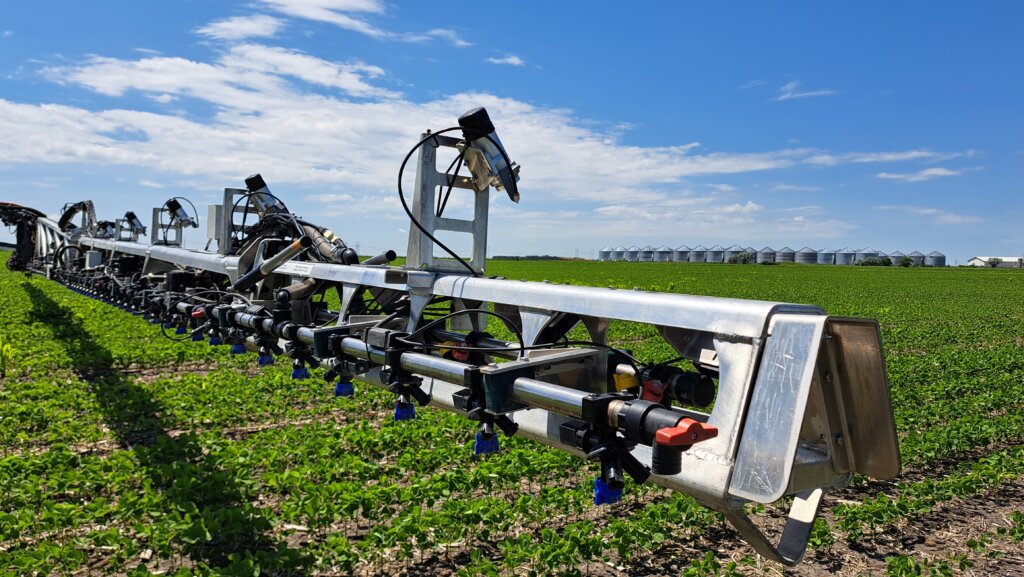
(c) Invest in individual nozzle shutoffs to improve sectional control resolution. These are part of any Pulse Width Modulation system but can also be obtained as air-actuated valves that are very affordable. Such capability is necessary for recirculating booms.
Nozzle sectional control can save 4 to 5% product use.
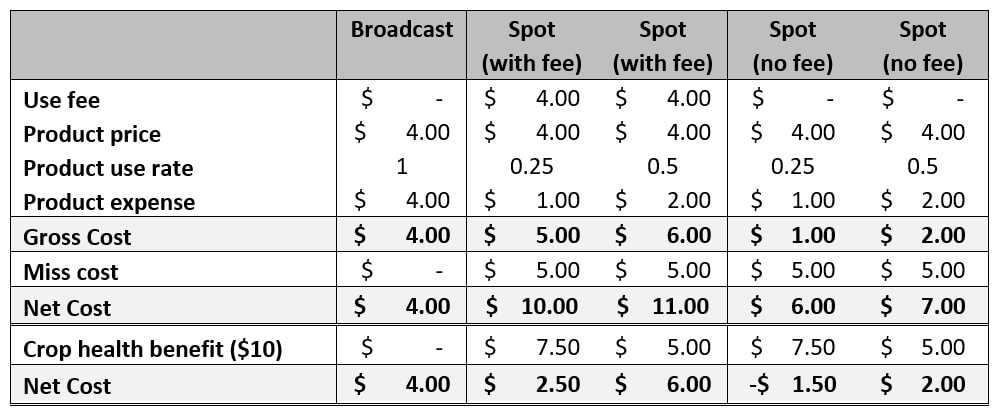
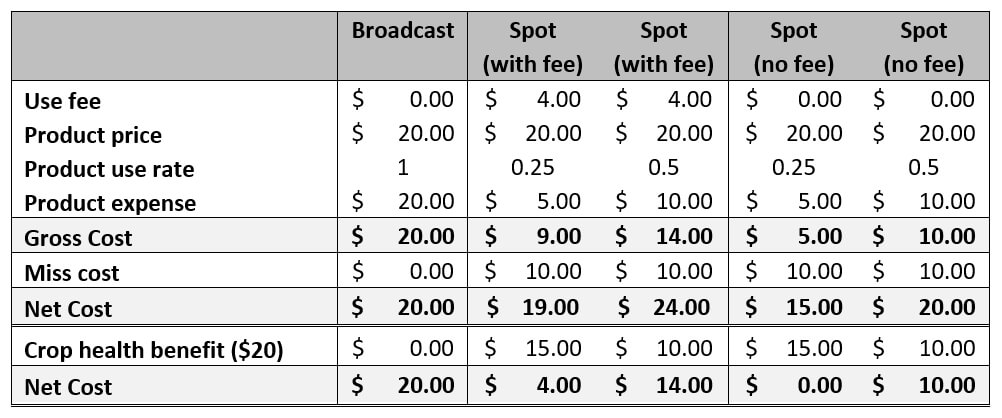
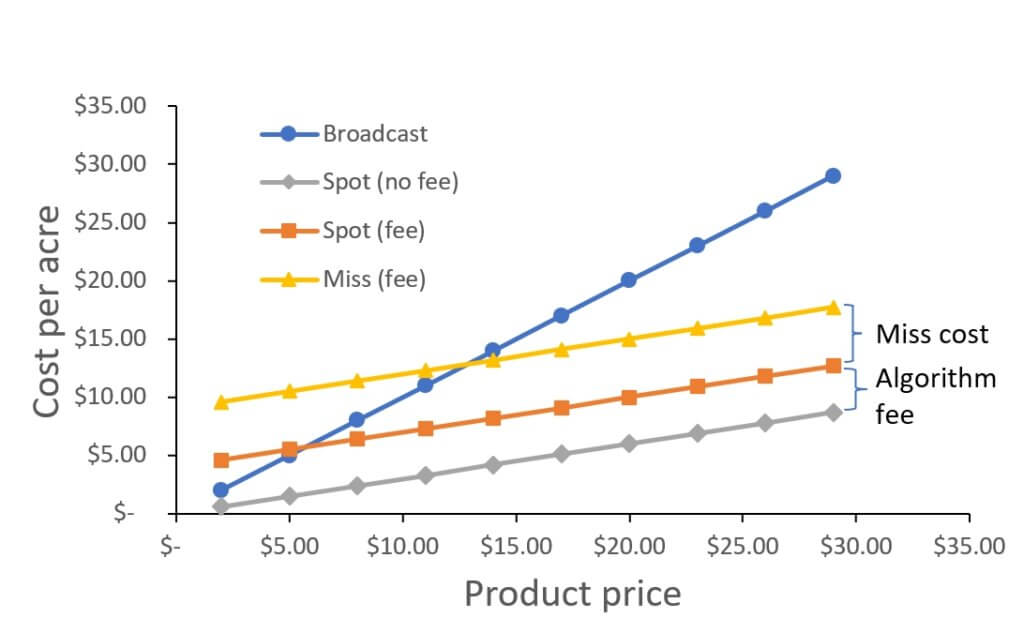
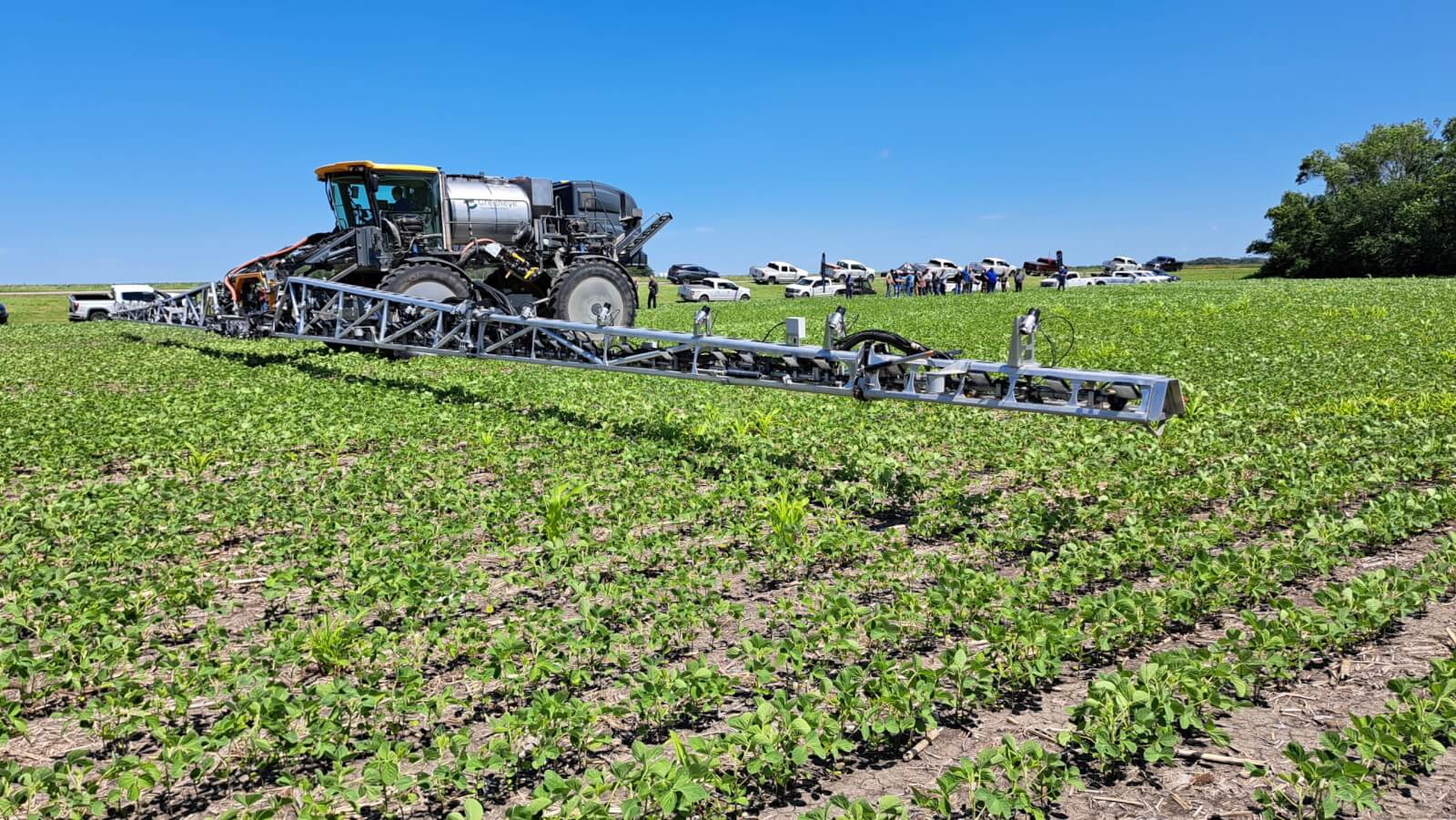
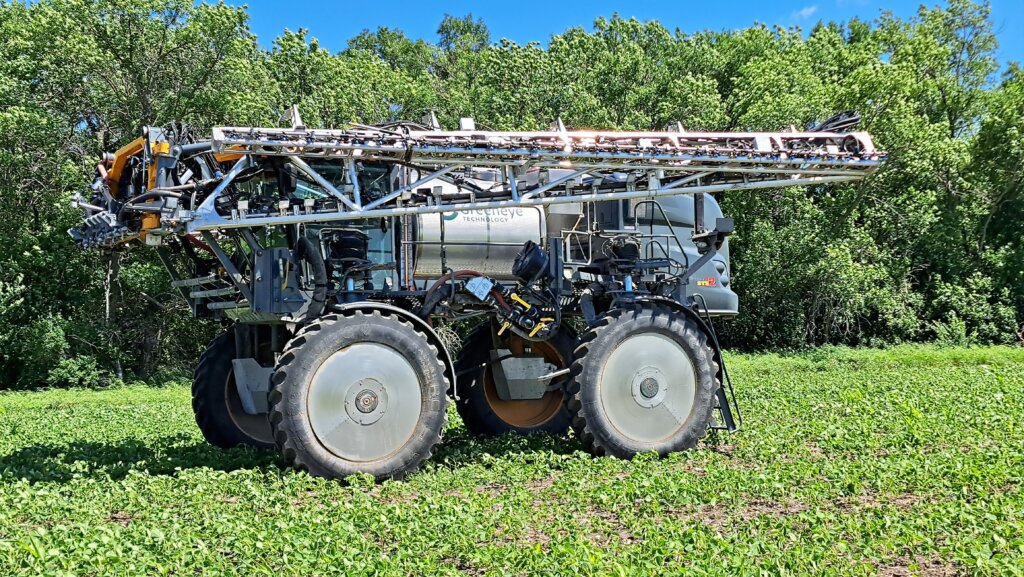
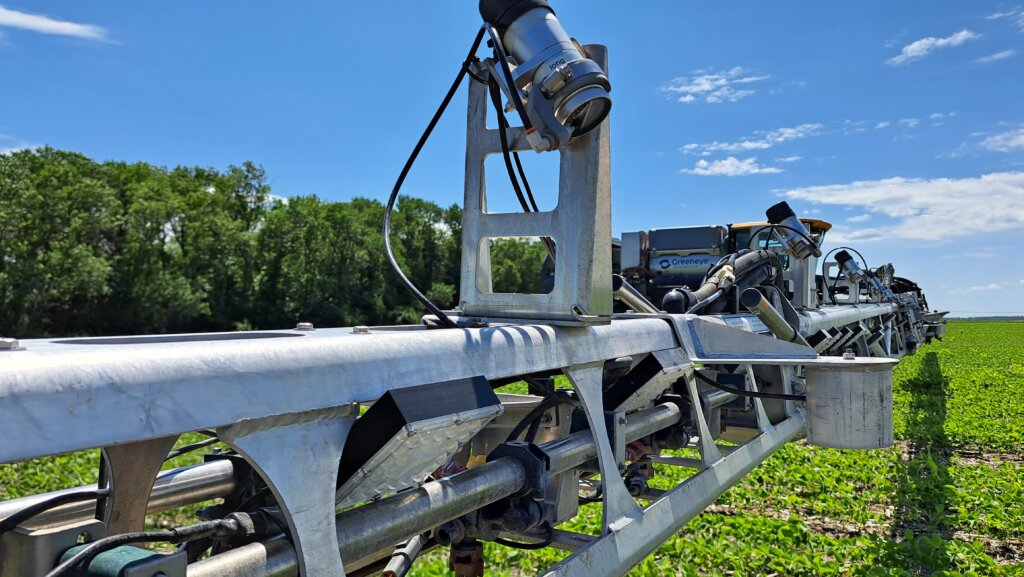
14. Consider an optical spot spray system such as the WEEDit Quadro, the Trimble WeedSeeker, or the John Deere See & Spray Select, available for 2022. These systems are “Green on Brown”, meaning they selectively spray just weeds in a burnoff or chem-fallow. This can save about 70% of the spray depending on weed density. More such systems are on the way, some even offering “Green on Green” that selectively identifies weeds among a crop. The return on investment of these systems is directly related to the pesticide cost, meaning in a year with high pesticide prices they pay off faster. If shortages of product become a reality, a spot sprayer may be the only way that some fields get treated at all.
Pesticide shortages will not be fun. Unfortunately, their appearance coincides with higher fertilizer prices, meaning crop establishment will need to overcome that factor as well. But there are tools to minimize the impact if we’re willing to implement them. Just as necessity is the mother of invention, scarcity is the father of conservation.